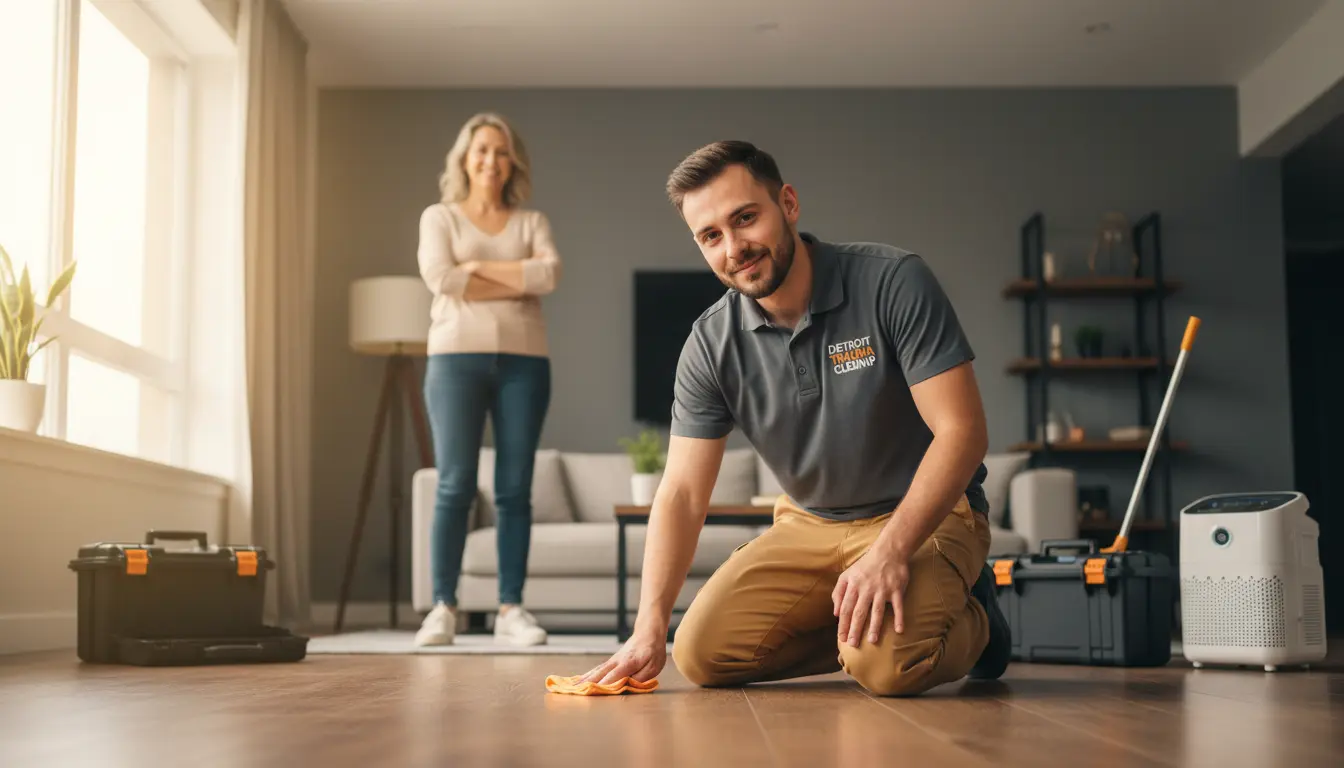
Imagine the unthinkable happening in your Detroit home or business—a sudden accident, crime scene, or unattended death leaving behind chaos and distress. In the heart of the Motor City, where communities like Corktown and the University District thrive with resilience, such events can strike without warning. That’s where professional emergency trauma cleanup comes in. At Detroit Trauma Cleanup, we specialize in restoring peace and safety to affected spaces with discretion and expertise. This guide walks you through what to expect, empowering you to navigate this challenging time with confidence.
Whether you’re in bustling Ferndale or quiet Huntington Woods, understanding the process can alleviate some of the overwhelming stress. Our team is here to handle the biohazardous mess so you can focus on healing. Let’s dive into the essentials of emergency trauma cleanup tailored to Detroit’s unique urban landscape.
Understanding Emergency Trauma Cleanup
Emergency trauma cleanup isn’t just about cleaning; it’s a specialized service that addresses biohazards, pathogens, and emotional trauma. In Detroit, where historic neighborhoods meet modern challenges, incidents like vehicle accidents on I-75 or unfortunate events in residential areas demand swift, compliant action.
What Triggers the Need for Trauma Cleanup?
Trauma scenes can arise from various scenarios, including suicides, homicides, accidents, or natural deaths leading to decomposition. For instance, in high-density areas like Troy, unattended deaths might go unnoticed for days, resulting in severe biohazard contamination. These situations release bodily fluids, bacteria, and odors that pose serious health risks if not handled properly.
Biohazards such as bloodborne pathogens require certified professionals equipped with PPE (personal protective equipment) and EPA-approved disinfectants. Attempting DIY cleanup can lead to exposure to diseases like hepatitis or HIV, not to mention legal liabilities under Michigan’s health regulations.
At Detroit Trauma Cleanup, we respond 24/7 to these emergencies, ensuring compliance with OSHA and local Detroit health codes. Our goal is to mitigate risks and restore the property to a safe, livable condition.
The Step-by-Step Process of Emergency Trauma Cleanup
When you call Detroit Trauma Cleanup at (313) 789-1565, our response is immediate and methodical. Here’s a breakdown of what happens from the moment we arrive on scene.
Initial Assessment and Securing the Scene
Upon arrival, our trained technicians first secure the area to prevent unauthorized access. In Detroit’s variable weather, this might involve tarping or sealing off entrances, especially in exposed urban spots like the University District.
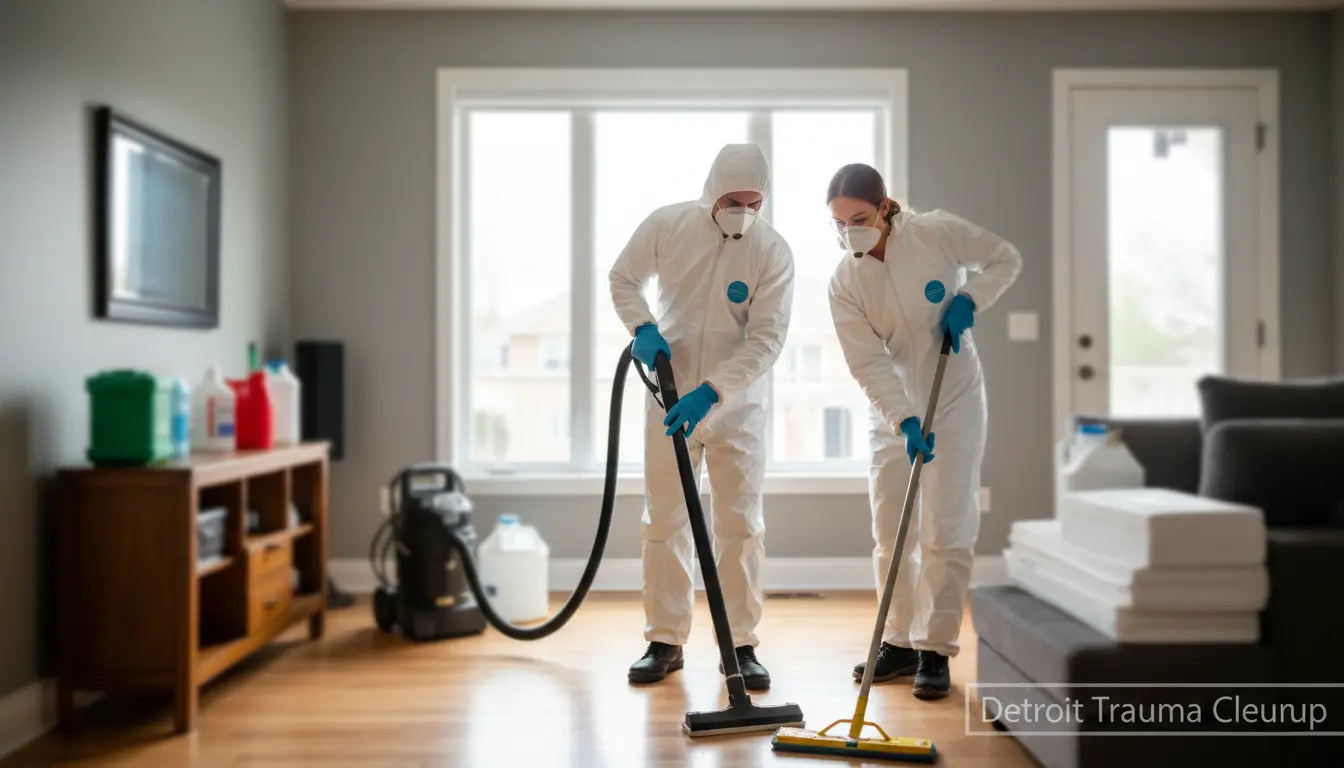
We conduct a thorough assessment, identifying biohazards, structural damage, and contamination extent. This step includes documenting the scene for insurance or law enforcement purposes if needed. Expect us to wear full protective gear—think hazmat suits and respirators—to maintain safety.
Practical tip: Before our team arrives, secure pets and valuables, and avoid the area to prevent cross-contamination. If it’s a crime scene, coordinate with Detroit Police to allow access.
Removal of Biohazardous Materials
Next, we remove all contaminated items. This includes bodily fluids, tissues, and porous materials like carpets or furniture that can’t be fully decontaminated. For contaminated surface cleaning, we use specialized tools to extract residues without spreading pathogens.
In cases of decomposition, decomposition odor elimination becomes crucial. Detroit’s humid summers can exacerbate odors, so we employ enzyme-based cleaners and industrial fans to neutralize them at the source.
Actionable advice: Document any damaged property with photos for insurance claims. We’ll provide a detailed report to support your case.
Deep Cleaning and Disinfection
With hazards removed, we proceed to deep cleaning. This involves scrubbing surfaces with hospital-grade disinfectants and using UV light for sterilization. For trauma area sanitization, we focus on high-touch areas like doorknobs and floors.
If medical waste is present, such as needles or sharps from an accident, our medical waste management protocols ensure safe disposal at certified facilities, adhering to Michigan’s strict waste regulations.
Local note: In neighborhoods like Corktown, where historic homes have unique architecture, we take extra care to preserve original features during cleaning, avoiding damage to woodwork or plaster.
Odor Control and Final Restoration
Lingering odors are a common concern post-trauma. Our odor control treatment uses ozone generators and air scrubbers to eliminate smells at a molecular level. In Detroit’s older buildings, this prevents odors from seeping into HVAC systems.
Finally, we restore the space—replacing flooring, repainting, or deodorizing as needed. Expect the entire process to take 8-72 hours, depending on the scene’s severity. In smaller areas like Ferndale apartments, it might be quicker; larger Troy properties could take longer.
Practical tip: Ventilate the space post-cleanup by opening windows, but wait for our clearance certificate before reoccupying. This ensures no residual hazards remain.
Practical Tips for Dealing with Trauma Cleanup in Detroit
Navigating a trauma incident can feel isolating, but preparation helps. Here are actionable steps tailored to Detroit residents:
-
Contact Professionals Immediately: Don’t delay—call (313) 789-1565 for Detroit Trauma Cleanup. Time is critical to prevent mold or further contamination, especially in our rainy climate.
-
Prepare Your Space: Clear non-essential items and restrict access. If in a multi-unit building in Huntington Woods, notify neighbors discreetly to avoid rumors.
-
Understand Insurance Coverage: Many policies cover trauma cleanup. We’ll work with your provider to minimize out-of-pocket costs.
-
Emotional Support: Trauma affects more than the physical space. Connect with local Detroit resources like the Wayne County Crisis Hotline for counseling.
-
Prevent Future Incidents: Install safety features like grab bars in homes or security systems in businesses, common in urban areas like the University District.
By following these tips, you regain control faster. Remember, our team handles the heavy lifting with compassion, understanding the emotional toll.
FAQ: Common Questions About Emergency Trauma Cleanup in Detroit
How Quickly Can Detroit Trauma Cleanup Respond?
We offer 24/7 emergency services, arriving within 1-2 hours in most Detroit metro areas, including Troy and Corktown. Speed is our priority to contain hazards.
Is Trauma Cleanup Covered by Insurance?
Often yes, under homeowner’s or commercial policies for biohazard events. We’ll assist with claims and provide necessary documentation.
What Makes Your Services Discreet?
Our unmarked vehicles and professional demeanor ensure privacy. We respect your situation, especially in close-knit communities like Ferndale.
Do I Need to Be Present During Cleanup?
Not necessarily, but we recommend a point of contact. You can wait elsewhere while we work, and we’ll update you throughout.
How Do You Ensure Safety After Cleanup?
We use EPA-registered products and provide a certificate of disinfection, guaranteeing the space meets health standards for reoccupation.
Conclusion: Restore Your Peace with Detroit Trauma Cleanup
Emergency trauma cleanup in Detroit is a complex but essential service that goes beyond surface cleaning—it’s about reclaiming your space and sanity. From the initial shock in a Corktown rowhouse to full restoration in a Troy suburb, Detroit Trauma Cleanup stands ready to help with unmatched expertise and empathy.
Don’t face this alone. If you’ve experienced a traumatic event, contact us today at (313) 789-1565 or visit our University District service page to learn more about how we serve your neighborhood. Let us handle the cleanup so you can focus on moving forward. Your safety and peace of mind are our mission.