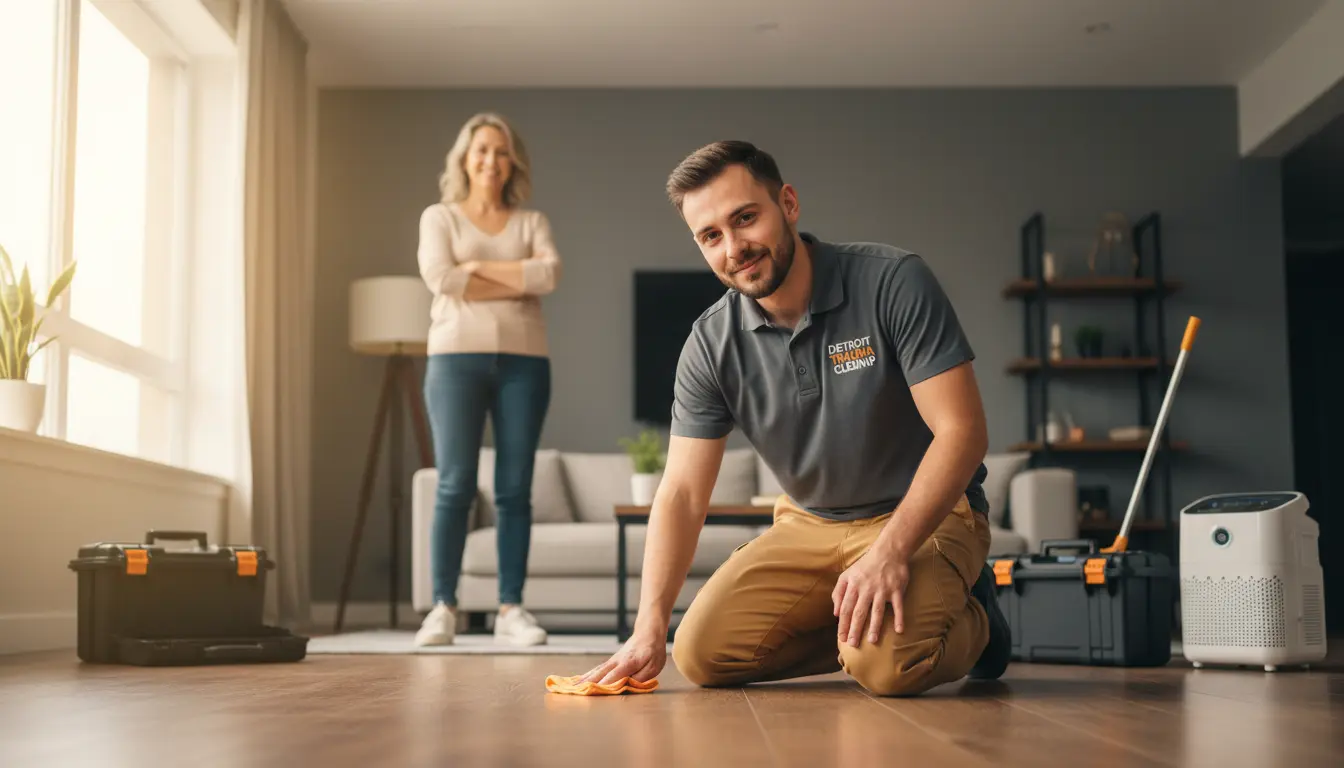
Trauma cleanup services near Midtown Detroit and surrounding neighborhoods address the specialized process of safely removing biohazardous materials—blood, bodily fluids, tissue, and other potentially infectious substances—from a property following an unattended death, suicide, homicide, or severe accident. This is not a surface-level janitorial task; professional remediation involves strict adherence to OSHA’s Bloodborne Pathogens Standard (29 CFR 1910.1030), EPA guidelines for antimicrobial use, and the IICRC S540 Standard for Trauma and Crime Scene Cleanup. Unlike standard residential cleaning, which focuses on visible dirt and general sanitation, trauma cleanup targets hidden biological hazards that pose immediate and long-term health risks if left untreated.
Detroit’s unique residential landscape—historic homes with porous materials like plaster and lath, aging wood flooring, and older HVAC systems—amplifies the complexity of biohazard remediation. Biological fluids can seep deep into subfloors, wall cavities, and ductwork, creating environments where bloodborne pathogens such as hepatitis B (HBV), hepatitis C (HCV), and human immunodeficiency virus (HIV) can survive for days. Professional intervention is not optional; it is a critical step to ensure the property is structurally safe, legally compliant with Wayne County health regulations, and suitable for future occupancy or sale. Detroit Trauma cleanup provides this specialized service with the discretion, technical rigor, and local knowledge that Midtown residents and property managers require.
Understanding the Scope of Biohazard Remediation in Detroit
Biohazard remediation is a multi-layered discipline that goes far beyond removing visible stains. The primary goal is to eliminate all biological contaminants, including pathogens that are invisible to the naked eye. This requires a systematic approach that begins with a thorough risk assessment of the affected area. In Midtown Detroit, where many residential structures date back to the early 20th century, the assessment must account for unique architectural features—such as crawl spaces, attics converted into living quarters, and shared walls in duplexes—that can harbor unseen contamination.
After the assessment, the remediation team establishes containment zones using physical barriers and negative air pressure systems. Negative air machines, equipped with HEPA filters, prevent airborne particles from migrating to unaffected areas of the property. This step is critical in multi-unit buildings common in neighborhoods like Woodbridge and Cass Corridor, where cross-contamination could affect neighboring residents. The entire process is governed by IICRC S540 standards, which mandate documentation of every phase, from initial inspection to final clearance testing. Detroit Trauma cleanup technicians are certified in these protocols, ensuring that every job meets or exceeds regulatory requirements.
Step-by-Step Technical Process of Trauma Cleanup
Initial Risk Assessment and Site Evaluation
The first step on-site is a visual and instrumental inspection. Technicians use moisture meters and thermal imaging cameras to detect biological seepage behind walls and under flooring. In Detroit’s older homes, blood and other fluids can wick into porous brick or mortar, creating a hazard that standard cleaning cannot address. The assessment also identifies any sharp objects, needles, or other medical waste that require special handling under Michigan’s Medical Waste Regulatory Act.
Personal Protective Equipment (PPE) Protocol
Before any removal begins, the team dons full PPE: Tyvek suits, nitrile gloves, face shields, and N95 or P100 respirators. This is not optional. OSHA mandates that employers protect workers from occupational exposure to bloodborne pathogens. In practice, this means every technician must be trained in bloodborne pathogens annually and fit-tested for respiratory protection. Failure to follow these protocols exposes workers to serious diseases and creates legal liability for property owners who hire unqualified cleaners.
Physical Removal of Biohazardous Materials
All visible biological matter is carefully removed using absorbent materials, scraping tools, and in some cases, surgical-grade removal of porous materials. For example, wood flooring soaked with blood must be cut out and disposed of as regulated medical waste. In Detroit’s historic homes, this often means replacing sections of hardwood that cannot be salvaged. Similarly, drywall with biological stains is removed up to two feet beyond the visible contamination to ensure no pathogens remain embedded in the gypsum core.
Chemical Disinfection and Sanitization
After physical removal, all surfaces are treated with EPA-registered hospital-grade disinfectants that are effective against HBV, HCV, and HIV. These disinfectants require a specific dwell time—typically 10 to 20 minutes—to achieve viral inactivation. Technicians apply them using electrostatic sprayers that ensure even coverage on complex surfaces like textured ceilings or brick walls. In colder months, when Detroit’s indoor heating systems dry out the air, disinfectants may evaporate faster, requiring careful monitoring to maintain the correct contact time.
ATP Fluorescence Testing for Verification
To confirm that the site is biologically clean, technicians use adenosine triphosphate (ATP) testing. This handheld device measures the presence of organic matter on surfaces. A reading below the industry threshold indicates that the area has been effectively sanitized. This objective verification is a key differentiator between professional remediation and a standard cleaning job that merely looks clean. Detroit Trauma cleanup provides clients with documentation of these test results, offering peace of mind that the property is safe for reoccupation.
Structural Decontamination and Odor Neutralization
Finally, the team addresses any lingering odors using ozone generators or hydroxyl machines. These devices break down volatile organic compounds (VOCs) produced by decomposing tissue. In Detroit’s humid summers, decomposition accelerates rapidly, and odor can permeate entire houses. Professional-grade equipment is necessary to neutralize these compounds completely, rather than simply masking them with fragrances.
Data Comparison: Professional Remediation vs. Standard Cleaning
The following table highlights the critical differences between professional biohazard remediation and standard residential cleaning services. These distinctions underscore why only trained, certified technicians should handle trauma scenes.
| Feature/Metric | Professional Biohazard Remediation | Standard Residential Cleaning |
|---|---|---|
| Regulatory Compliance | OSHA 29 CFR 1910.1030, EPA FIFRA, DOT hazardous waste transport | No specific regulatory oversight |
| Pathogen Elimination | EPA-registered hospital disinfectants, ATP testing verified | Household bleach or general-purpose cleaners, no verification |
| Structural Assessment | Thermal imaging, moisture meters, removal of porous materials | Visual inspection only, no assessment of hidden contamination |
| Waste Disposal | Incinerated as regulated medical waste per Michigan law | Standard trash pickup, illegal for biohazard waste |
| Cross-Contamination Prevention | Negative air pressure, HEPA filtration, containment barriers | No containment measures, risk of spreading pathogens |
Expert Insights: Advanced Diagnostic Tips and Common Mistakes
Three Professional Diagnostic Tips
First, always check for biological seepage beneath flooring using a moisture meter calibrated for organic liquids. Blood has a different thermal conductivity than water, and a trained technician can differentiate between a water leak and a biological stain. Second, when dealing with porous materials like unsealed grout or old brick, assume that replacement is necessary. Cleaning may not reach pathogens embedded in microscopic pores, and ATP testing will confirm if sanitization is insufficient. Third, always establish negative pressure in the containment zone before starting removal. This prevents airborne pathogens—such as those released when cutting into drywall—from circulating into unaffected rooms, which is especially important in Detroit’s older buildings with shared ductwork.
Two Common Mistakes Property Owners Make
Many property owners attempt to clean a trauma scene using household bleach, believing it will disinfect the area. Bleach is ineffective against bloodborne pathogens when it encounters organic matter, as the proteins in blood neutralize the chlorine. This mistake can leave viable viruses and bacteria on surfaces, endangering anyone who enters the property. Another frequent error is waiting for odors to dissipate naturally. In Detroit’s summer heat, decomposition accelerates, and airborne VOCs can migrate into neighboring units. Delaying professional cleanup increases the risk of structural damage and health problems for nearby occupants.
Pricing Structure for Trauma Cleanup Services
- Site mobilization fee – Covers the cost of transporting specialized equipment, PPE, and a certified team to the location. In Detroit, this fee typically ranges from $150 to $300, depending on travel distance within the metropolitan area.
- Hourly remediation rate – Most professional firms charge between $150 and $300 per hour per technician. Complex jobs in Midtown’s historic homes often require two to four technicians working for multiple hours, driving total labor costs higher.
- Specialized biohazard waste disposal – Regulated medical waste must be incinerated at licensed facilities. Fees are calculated by weight, with costs averaging $1 to $3 per pound. A typical unattended death scene can generate 50 to 200 pounds of waste.
Several factors influence the final cost. The extent of structural material replacement—such as removing and replacing subfloors, drywall, or insulation—adds significant expense. The total volume of biohazardous waste directly correlates with disposal fees. Additionally, if the HVAC system requires decontamination due to odor or airborne pathogen migration, that service is billed separately and can cost $500 to $2,000 depending on ductwork complexity.
Safety Standards and Certifications in Detroit
Professional trauma cleanup firms must hold IICRC certifications, specifically the Trauma and Crime Scene Remediation (TCSR) designation. This credential requires continuing education in the latest disinfection technologies and regulatory updates. OSHA’s Bloodborne Pathogens Standard is the backbone of workplace safety during these jobs, mandating that every technician receive annual training and have access to hepatitis B vaccination. Without these certifications, a cleaning service cannot legally handle biohazard materials in Michigan.
Beyond certifications, firms must use authorized medical waste transporters and disposal facilities. The Michigan Department of Environment, Great Lakes, and Energy (EGLE) regulates the handling of infectious waste, and improper disposal can result in fines of up to $25,000 per violation. For property owners in Midtown Detroit, hiring a certified team like Detroit Trauma cleanup ensures compliance with these regulations, protecting them from legal liability and potential fines.
Frequently Asked Questions About Trauma Cleanup
What is the difference between trauma cleanup and biohazard remediation?
Trauma cleanup is a subset of biohazard remediation that specifically addresses scenes involving human injury or death. Biohazard remediation is the broader category that also includes cleaning up animal waste, hoarding environments, and industrial biological spills. Both follow the same IICRC S540 standards for safety and disinfection, but trauma cleanup often requires additional sensitivity when dealing with family members and law enforcement.
How long does a typical trauma cleanup take in a Detroit home?
The duration depends on the size of the affected area and the extent of contamination. A single-room cleanup in a Midtown apartment may take four to eight hours, while a multi-room scene involving structural material removal can require two to three days. Seasonal factors also play a role; in winter, ice and snow can delay access to dumpsters or waste disposal facilities, and technicians may need extra time to thaw frozen biohazard materials before removal.
Can trauma cleanup be covered by insurance?
Many homeowner and property insurance policies include coverage for biohazard remediation under the “pollutant cleanup” or “debris removal” clauses. It is essential to contact your insurer immediately after the incident and request a licensed remediation company to perform the work. Detroit Trauma cleanup provides detailed documentation and invoices that support insurance claims, helping property owners recover costs without delays.
Is it safe to stay in the home during the cleanup process?
No. The containment zone is under negative pressure, meaning airborne particles are being drawn into HEPA filters. While the rest of the property may appear unaffected, there is a risk of cross-contamination if the containment barrier is breached. Professional remediation teams require the property to be unoccupied during active cleanup and for a period of 24 to 48 hours after final disinfection to allow any airborne particles to settle and be filtered.
What happens to personal belongings that are contaminated?
Items that cannot be effectively disinfected—such as upholstered furniture, mattresses, or clothing with visible biological stains—must be disposed of as regulated medical waste. Hard, non-porous items like glass, metal, or sealed wood can be cleaned and returned if they pass ATP testing. Detroit Trauma cleanup always consults with the property owner before discarding any items, providing a detailed inventory for insurance purposes.
Professional Biohazard Remediation in Detroit
Trauma cleanup is a demanding field that requires technical precision, regulatory knowledge, and genuine compassion for property owners facing difficult circumstances. Detroit Trauma cleanup combines certified expertise with a deep understanding of the local environment—from the structural quirks of historic Midtown homes to the seasonal challenges of Michigan winters. Every job is approached with a commitment to safety, thoroughness, and discretion, ensuring that properties are restored to a condition that is both sanitary and habitable.
For property managers, homeowners, and families in Midtown Detroit and the surrounding neighborhoods, choosing a qualified remediation service is not just about cleanliness—it is about protecting health, preserving property value, and meeting legal obligations. Detroit Trauma cleanup delivers on all these fronts, offering reliable, documented remediation that stands up to scrutiny. Contact them to schedule an assessment or learn more about their comprehensive biohazard services.