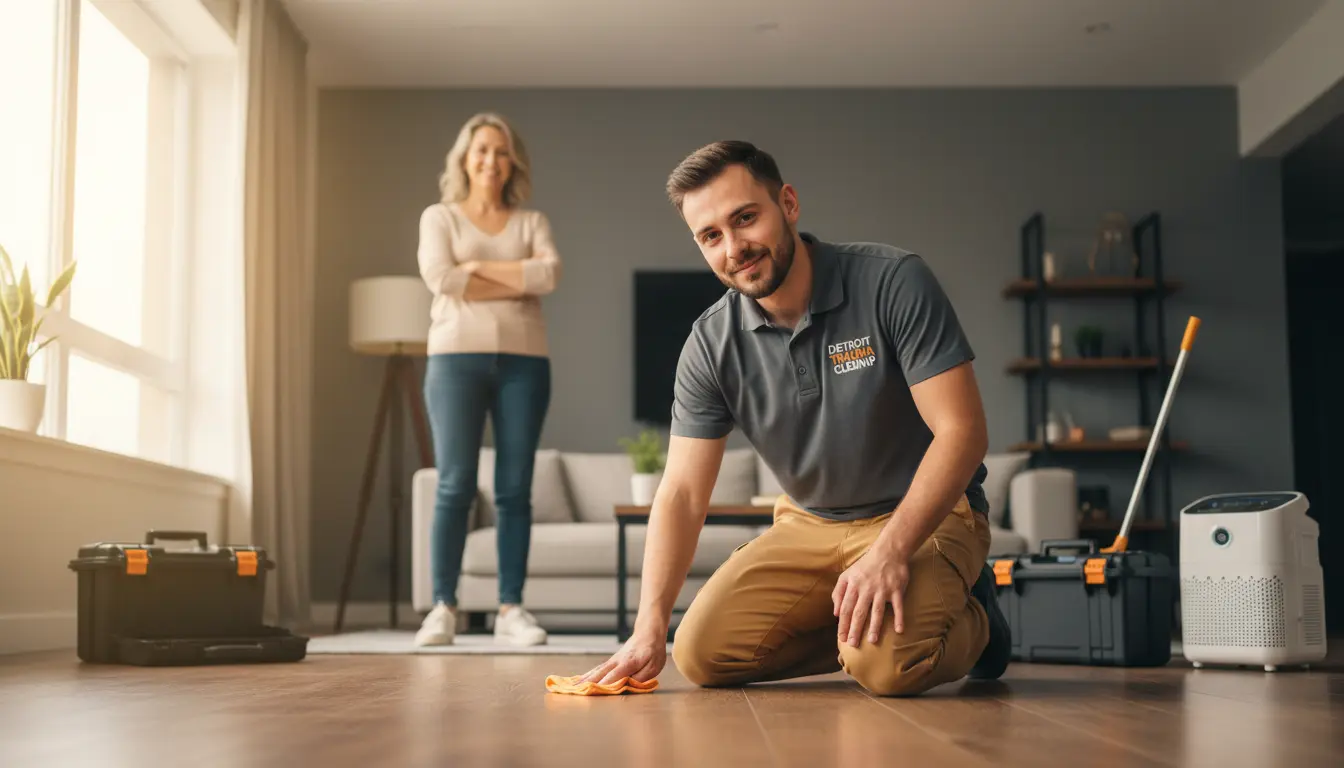
Initial Risk Assessment and Site Mobilization
Every trauma cleanup job in Detroit starts with a comprehensive risk assessment. A certified technician arrives at the property, often within hours of the initial call, to evaluate the scope of the biohazard contamination. This includes identifying all affected areas—sometimes hidden behind walls, under flooring, or in HVAC systems. The technician also notes the type of biological material present, the duration of exposure, and the structural conditions of the building.
During this phase, the team establishes containment zones. Negative air machines are set up to create a pressure differential that prevents airborne contaminants from spreading to unaffected parts of the home. This is especially critical in Detroit’s older homes, where shared ductwork or open floor plans can allow pathogens to migrate quickly. The entire site is then secured to prevent unauthorized access, and a detailed work plan is developed in accordance with OSHA Bloodborne Pathogens Standard 29 CFR 1910.1030 and IICRC S540 guidelines.
Personal Protective Equipment and Biohazard Removal
Technicians don full-body Tyvek suits, respirators with HEPA filters, face shields, and chemical-resistant gloves. Every piece of equipment is inspected for integrity before entry. The removal process begins with the physical extraction of all biohazardous materials—blood-soaked carpets, saturated drywall, contaminated insulation, and any porous items that cannot be effectively decontaminated.
In Detroit’s climate, the challenge of decomposition compounds is significant. Michigan’s humid summers can accelerate bacterial growth, while winter heating systems dry out fluids but cause odor molecules to become airborne and embed in textiles. Professional teams use specialized enzyme treatments to break down organic matter at the molecular level, ensuring that no residual biological material remains. All waste is double-bagged in biohazard containers, labeled, and transported to a licensed medical waste incineration facility in compliance with Wayne County regulations.
Chemical Sanitization and ATP Testing
After all visible biohazards are removed, the team applies EPA-registered hospital-grade disinfectants to every surface. This step is not a simple spray-and-wipe; it involves a dwell time—typically 10 to 15 minutes—during which the disinfectant remains wet to achieve viral inactivation and bacterial elimination. High-touch areas such as light switches, door handles, and baseboards receive special attention.
To verify cleanliness, technicians use adenosine triphosphate (ATP) fluorescence testing. A handheld device measures the presence of organic residue on surfaces. If the reading exceeds the industry threshold (usually below 100 relative light units), the area is re-cleaned and retested. This scientific validation ensures that the property is not just visually clean but biologically safe. In Detroit, where many homes have porous brick or plaster walls, ATP testing is essential for confirming that no hidden biological seepage remains.
Structural Decontamination and Odor Removal
Once the biological cleanup is complete, the focus shifts to the structure itself. Trauma cleanup often requires the removal of damaged materials—carpet, padding, subflooring, and drywall—that have absorbed fluids or odors. In Detroit’s historic homes, this can be especially intricate because original materials like lath and plaster require careful demolition to avoid destabilizing walls.
Ozone generators or hydroxyl machines are then deployed to neutralize lingering odors at the molecular level. This step is critical in Detroit’s winter months, when windows are sealed and odor molecules can become trapped in the home’s envelope. The goal is to restore the property to a condition where it can be safely inhabited or prepared for renovation. This phase is often called forensic restoration because it involves meticulous documentation and reconstruction planning.
Professional vs. Janitorial Cleaning: A Data Comparison
The table below contrasts the capabilities of professional biohazard remediation with standard residential cleaning. The differences are stark and underscore why trauma cleanup cannot be handled by a regular cleaning crew.
| Feature/Metric | Professional Biohazard Remediation | Standard Residential Cleaning |
|---|---|---|
| Regulatory Compliance | Follows OSHA, EPA, IICRC S540, and local Wayne County waste disposal laws | No regulatory oversight for biohazards |
| Pathogen Elimination | EPA-registered hospital-grade disinfectants with verified ATP testing | Household cleaners (e.g., bleach) that may not kill all pathogens |
| Structural Assessment | Identifies hidden contamination in walls, subfloors, and HVAC systems | Limited to surface-level cleaning |
| Odor Removal | Ozone/hydroxyl treatment and enzyme oxidation | Air fresheners that mask but do not eliminate |
| Waste Disposal | Medical waste incineration via licensed transporters | Standard trash disposal (illegal and dangerous) |
| Insurance Documentation | Detailed reports and chain-of-custody records for claim processing | No documentation provided |
Source: IICRC S540 Trauma and Crime Scene Cleanup Standard
Expert Insights: Advanced Diagnostic Tips
Professional trauma cleanup requires a diagnostician’s eye. One of the most overlooked aspects is the detection of hidden biological seepage. In Detroit’s older homes, blood or decomposition fluids can seep through cracks in hardwood floors or gaps in baseboards, pooling beneath the subfloor. A trained technician uses a combination of moisture meters and olfactory sensing—the distinct smell of decay—to locate these areas. Any saturated subflooring must be removed and replaced, not simply cleaned on top.
Another critical insight: porous materials such as carpet, padding, upholstery, and drywall nearly always require replacement. Even with aggressive cleaning, the porous nature of these materials allows pathogens to remain deep within the fibers or pores. The IICRC S540 standard is clear: if a porous surface has been contaminated with blood or body fluids, it must be removed and disposed of as biohazard waste. Trying to salvage it poses a long-term health risk to occupants.
Negative pressure containment is a non-negotiable protocol. In Detroit’s winter, when homes are tightly sealed, the risk of cross-contamination during the cleaning process is high. Without negative air machines, airborne pathogens can travel through the HVAC system and contaminate the entire house. Professional teams always set up a separate exhaust pathway to the outdoors, ensuring that air from the contaminated zone is filtered and expelled, not recirculated.
Common Mistakes Property Owners Make
Many homeowners in Detroit, faced with the emotional and financial burden of a traumatic event, attempt to clean the scene themselves using household bleach. This is one of the most dangerous mistakes. Bleach is ineffective against many bloodborne pathogens, including hepatitis B and C, because it can be deactivated by organic matter. Moreover, bleach fumes can damage respiratory systems and react with other chemicals to produce toxic gases.
Another common error is waiting for the odor to dissipate naturally. By the time the smell is noticeable, decomposition has already released volatile organic compounds that can permeate building materials. The longer the wait, the more extensive the structural damage—and the higher the cost of remediation. Finally, allowing untrained family members or friends to enter the site before professional cleanup not only exposes them to pathogens but also complicates insurance claims. Many policies require that the property be secured and professionally remediated to maintain coverage.
Pricing for Trauma Cleanup in Detroit
- Standard site mobilization fee: $500–$1,000, which covers the dispatch of a certified crew, transportation of equipment, and initial containment setup.
- Hourly remediation rates: $150–$300 per technician, depending on the complexity of the scene and the number of team members required. Most jobs involve a crew of two to four technicians.
- Specialized disposal costs: $200–$800 for the safe removal and incineration of biohazardous waste, including transport and paperwork handled by a licensed medical waste hauler.
Three primary factors influence the final cost. First, the extent of structural material replacement—if subflooring, drywall, or insulation must be removed and replaced, the cost increases significantly. Second, the total volume of biohazardous waste: a larger volume requires more disposal containers and more labor. Third, the necessity for specialized HVAC decontamination: if the home’s heating or cooling system has been contaminated, cleaning or replacing ductwork can add $1,000–$3,000 to the total. Every estimate is based on a thorough on-site assessment, and Detroit Trauma cleanup provides transparent pricing with no hidden fees.
Safety and Standards: The Foundation of Trust
Professional trauma cleanup is governed by a strict framework of certifications and regulations. The IICRC S540 standard for trauma and crime scene cleanup outlines every step of the process, from initial assessment to final clearance testing. OSHA’s Bloodborne Pathogens Standard (29 CFR 1910.1030) mandates that all technicians receive annual training on exposure control, proper use of personal protective equipment, and emergency procedures. Additionally, the EPA regulates the disinfectants used, ensuring they meet efficacy standards for specific pathogens.
In Detroit, compliance with Wayne County waste management rules is critical. Biohazardous waste must be transported by a licensed hauler and incinerated at an approved facility. Failure to follow these protocols can result in fines and liability for the property owner. Detroit Trauma cleanup maintains all necessary permits and documentation, providing clients with peace of mind that the job is done legally and safely. This level of rigor protects not only the current occupants but also future tenants and buyers from exposure to communicable diseases.
Frequently Asked Questions About Trauma Cleanup
How long does a typical trauma cleanup take in Detroit?
The duration depends on the size of the affected area, the type of contamination, and the structural complexity of the home. For a single room with moderate contamination, the process usually takes one to two days. A full-home cleanup, such as after an unattended death, may require three to five days. Factors like winter weather—which can delay drying times for disinfectants—and the need for structural repairs can extend the timeline. The team works efficiently to minimize disruption, but thoroughness always takes precedence over speed.
Is it safe to stay in the home during the cleanup?
In most cases, it is not safe for occupants to remain in the home during active biohazard remediation. The use of negative air machines, chemical disinfectants, and the removal of contaminated materials create airborne particles and fumes that can be hazardous. The property is typically declared a containment zone, and access is limited to trained technicians. After the cleanup is complete and ATP testing confirms the area is safe, residents can return. The team provides a certificate of clearance for peace of mind.
What happens to the biohazard waste after removal?
All biohazardous waste—including blood-soaked materials, contaminated PPE, and removed building components—is placed in red biohazard bags, sealed, and labeled according to OSHA and DOT regulations. A licensed medical waste transporter picks up the waste and delivers it to a permitted incineration facility in the Great Lakes region. The incineration process destroys all pathogens, and the ash is disposed of in accordance with environmental laws. Detroit Trauma cleanup maintains a complete chain-of-custody record for each job, which is shared with the client for insurance and legal purposes.
Do you work with insurance companies for trauma cleanup claims?
Yes, we work directly with most major insurance providers. After the initial assessment, we provide a detailed estimate and scope of work that aligns with industry standards. We can also handle the documentation required for claims, including photographs, narrative reports, and waste disposal manifests. Many homeowner’s policies cover trauma cleanup, especially in cases of accidental death, homicide, or suicide. We recommend contacting your insurance adjuster as soon as possible, but we can also assist in the notification process to ensure a smooth claim.
Professional Biohazard Remediation in Detroit
Trauma cleanup is a demanding, emotionally charged field that requires both technical expertise and unwavering compassion. In Detroit, where the housing stock varies from early 20th-century brick homes to modern condos, the ability to adapt to each property’s unique challenges is essential. Detroit Trauma cleanup brings years of experience, IICRC-certified technicians, and a deep understanding of local regulations to every job. We handle the physical and biological hazards so that property owners can focus on healing and moving forward.
If you are facing a traumatic event that has left your property contaminated, do not attempt to clean it yourself. The risks to your health, your property’s value, and your legal standing are too great. Contact Detroit Trauma cleanup today for a discreet, professional assessment. We will walk you through the process, answer your questions, and restore your home to a safe, habitable condition. Your well-being is our priority.