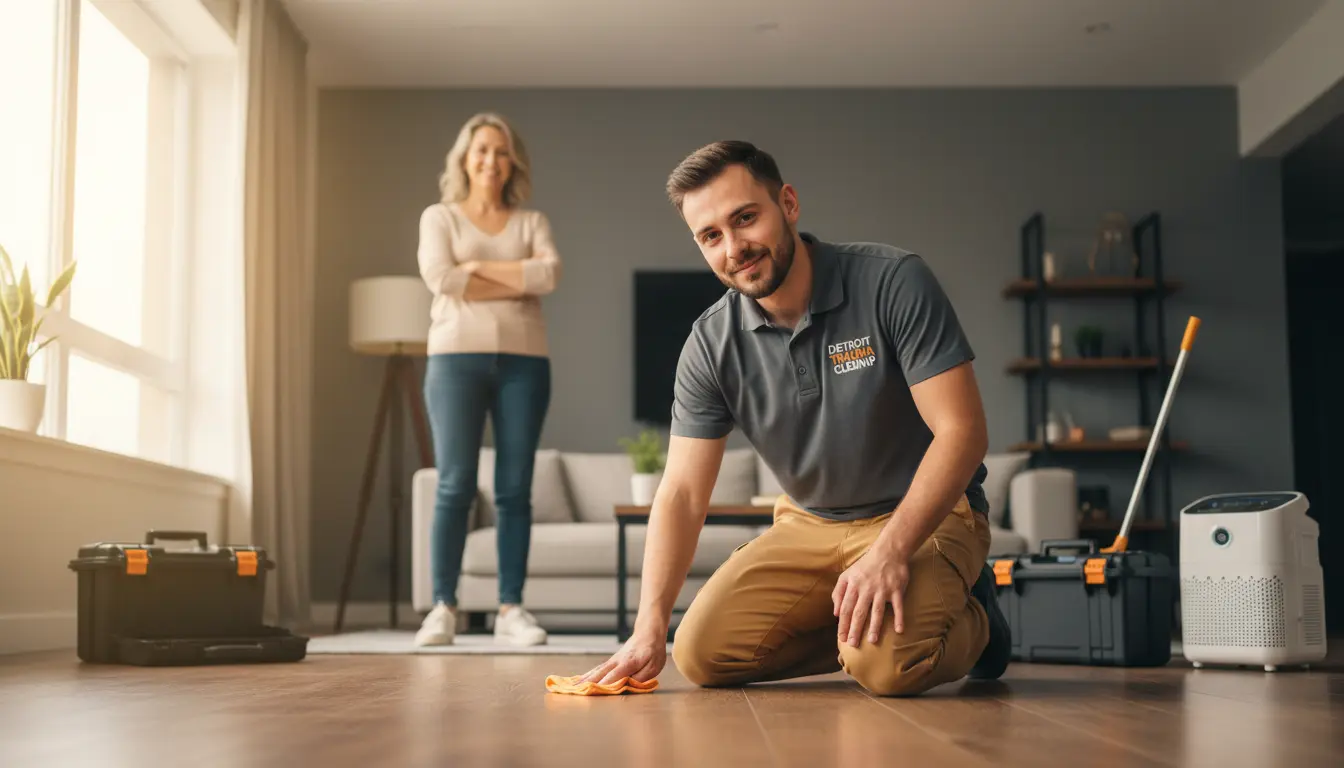
According to a 2026 report from the American Bio Recovery Association, nearly 40% of crime and trauma scenes in Detroit that undergo initial cleanup by untrained personnel still harbor dangerous levels of bloodborne pathogens. This statistic underscores a critical reality: without proper professional remediation, biological hazards persist, endangering occupants, first responders, and restoration workers. In a city like Detroit, where many residential structures date back to the early 20th century and feature porous materials like plaster, hardwood, and brick, the risk of hidden contamination is amplified. Choosing a trusted trauma cleanup company is not just a matter of cleanliness—it is a public health imperative that requires technical expertise, regulatory compliance, and a deep understanding of local conditions.
Detroit Trauma cleanup has established itself as the premier, authoritative, and discreet service provider in the area. Our team holds IICRC S540 certifications and operates under strict OSHA bloodborne pathogen standards. We combine advanced forensic restoration techniques with a compassionate approach to help property owners restore safety and peace of mind after a traumatic event.
Technical Process: Step-by-Step Professional Remediation
Professional trauma cleanup follows a rigorous, scientifically grounded workflow that differs fundamentally from standard cleaning. The process begins with an initial risk assessment where our specialists evaluate the scene using adenosine triphosphate (ATP) fluorescence testing to map biological contamination. This step identifies invisible traces of blood, tissue, and other organic matter that may have seeped into porous surfaces.
Once the assessment is complete, we initiate full personal protective equipment (PPE) protocols, including Tyvek suits, N95 respirators, and face shields, to prevent cross-contamination. Physical removal of biohazardous materials follows—using specialized tools like hospital-grade vacuums, HEPA-filtered negative air machines, and enzyme-based cleaning agents that break down proteins at the molecular level. In Detroit’s climate, where seasonal temperature swings can accelerate decomposition in unheated homes during winter, we prioritize rapid mobilization to contain odors and prevent microbial remediation challenges.
After physical removal, we apply EPA-registered disinfectants with proven viral inactivation rates against hepatitis B, hepatitis C, and HIV. Final verification involves another round of ATP testing to ensure contamination levels fall below the industry threshold of 50 Relative Light Units (RLU). For porous materials that cannot be fully sanitized—such as carpet, drywall, or insulation—we recommend structural decontamination or replacement to permanently eliminate biohazard risks.
Data Comparison Table: Professional Remediation vs. Standard Cleaning
| Feature/Metric | Professional Biohazard Remediation | Standard Residential Cleaning |
|---|---|---|
| Regulatory Compliance | OSHA 29 CFR 1910.1030, IICRC S540, EPA waste disposal | None; may violate federal and state guidelines |
| Pathogen Elimination | ATP testing < 50 RLU; 99.99% reduction verified | No verification; household bleach ineffective on organic matter |
| Structural Assessment | Full inspection of porous vs. non-porous materials; replacement plan | Visual only; hidden contamination remains |
| Odor Removal | Negative air scrubbers, ozone treatment, enzyme neutralization | Masking agents; decomposition odors return |
| Waste Disposal | Licensed medical waste hauler; incineration per Michigan regulations | Improper disposal, risk of legal penalties |
Expert Insights: Diagnostic Tips and Common Mistakes
Three Advanced Diagnostic Tips
1. Detecting Hidden Biological Seepage: Use ATP swab testing on surfaces that appear clean—especially around baseboards, under flooring, and inside HVAC vents. In Detroit’s older homes with plaster and lath walls, blood can wick into the material unseen. A reading above 100 RLU indicates the need for further structural decontamination.
2. Why Porous Materials Require Replacement: Even with industrial-grade disinfectants, porous materials like unfinished wood, carpet padding, and drywall can retain biological material in their microscopic pores. In Detroit’s humid summer months, these materials become breeding grounds for mold and bacteria. Professional judgment dictates removal rather than cleaning.
3. The Importance of Negative Pressure: Setting up negative air pressure with HEPA filtration prevents airborne particles from migrating to unaffected areas of the building. This is especially critical in Detroit’s multi-unit residential buildings, where cross-contamination can spread to neighboring units through shared ventilation systems.
Two Common Mistakes Property Owners Make
Mistake 1: Using Household Bleach on Biological Matter. Bleach is inactivated by organic material and cannot penetrate blood clots or tissue. Instead, it can fix proteins to surfaces, making them harder to remove. This mistake often leads to long-term health risks for occupants and costly structural damage when odors become embedded.
Mistake 2: Waiting for Odor to Dissipate Naturally. Decomposition odors indicate active microbial activity. In Detroit’s winter months, when homes are sealed tight against the cold, these odors accumulate and can saturate HVAC systems. Delaying professional remediation allows contamination to spread, increasing restoration costs and health hazards.
Pricing Considerations
- Standard site mobilization fee: $250–$500, covering travel, initial assessment, and setup of containment equipment.
- Hourly remediation rates typically range from $150–$300 per hour, depending on the complexity of the scene and the number of technicians required. For example, a single-room trauma cleanup may take 4–8 hours, while a whole-home scene can require 20+ hours.
- Itemized costs for specialized biohazard waste disposal: $50–$150 per pound of regulated medical waste, including proper labeling, transport, and incineration per Michigan Department of Environment, Great Lakes, and Energy (EGLE) guidelines.
Three key factors influence total cost: the extent of structural material replacement (e.g., removing hardwood flooring or drywall), the total volume of biohazardous waste (blood-soaked materials, tissue, sharps), and the necessity for specialized HVAC decontamination. In Detroit’s older homes, unexpected structural challenges—like lead paint or asbestos in building materials—can also add to the scope of work.
Safety and Standards
Every technician at Detroit Trauma cleanup holds current IICRC S540 Trauma and Crime Scene Cleanup certification and completes annual OSHA Bloodborne Pathogens Standard (29 CFR 1910.1030) training. We follow strict protocols for personal protective equipment, hand hygiene, and decontamination of tools and vehicles. Our waste disposal partner holds a Michigan EGLE permit for medical waste transport and incineration. These standards protect not only our team but also property owners, future occupants, and the community from communicable diseases. In a densely populated area like Detroit, improper disposal could lead to public health emergencies.
Frequently Asked Questions
What is the difference between trauma cleanup and standard janitorial cleaning?
Trauma cleanup involves the removal, sanitization, and restoration of scenes contaminated with blood, bodily fluids, or tissue from accidents, crimes, or unattended deaths. Standard janitorial cleaning lacks the training, equipment, and regulatory compliance to safely handle biohazards. Professional trauma cleanup follows IICRC S540 standards, uses EPA-registered disinfectants, and ensures pathogen elimination verified by ATP testing. Untrained cleaning can leave behind infectious agents and create legal liability.
How quickly should I call a trauma cleanup company after an incident?
Immediately. Biological materials begin to break down within hours, especially in Detroit’s variable climate. In summer, heat and humidity accelerate decomposition and odor migration. In winter, freezing conditions can preserve pathogens but also cause water damage if pipes freeze. Early intervention reduces the risk of structural damage, limits contamination spread, and lowers overall remediation costs. Our team is available 24/7 for emergency response.
Will my insurance cover trauma cleanup costs?
Most standard homeowner’s or property insurance policies cover biohazard remediation, but coverage varies. We recommend contacting your insurance provider immediately after the incident. Detroit Trauma cleanup works directly with adjusters to provide detailed documentation, including ATP test results, waste disposal manifests, and scope-of-work reports. We can also help file claims for structural repairs, such as drywall replacement or floor removal, which are often covered under property damage clauses.
What happens if I try to clean a trauma scene myself?
Self-cleaning poses serious health and legal risks. Bloodborne pathogens like hepatitis B can survive on surfaces for up to a week. Improper use of bleach can release toxic fumes and damage surfaces. You may also violate Michigan’s medical waste regulations, leading to fines. Furthermore, without ATP testing, you cannot confirm that the area is safe. In many cases, we have seen homes where self-cleaning led to persistent odors, mold growth, and health issues among occupants months later. Professional remediation is the only way to guarantee safety.
Professional Biohazard Remediation in Detroit
Choosing a trusted trauma cleanup company in Detroit means selecting a partner with technical expertise, local knowledge, and a commitment to safety. Detroit Trauma cleanup combines industry-leading certifications with decades of experience navigating the unique challenges of the region—from historic residential architecture to seasonal weather extremes. We provide compassionate, discreet, and thorough service that restores not just property but peace of mind. If you need reliable biohazard remediation, contact our team for a confidential consultation.