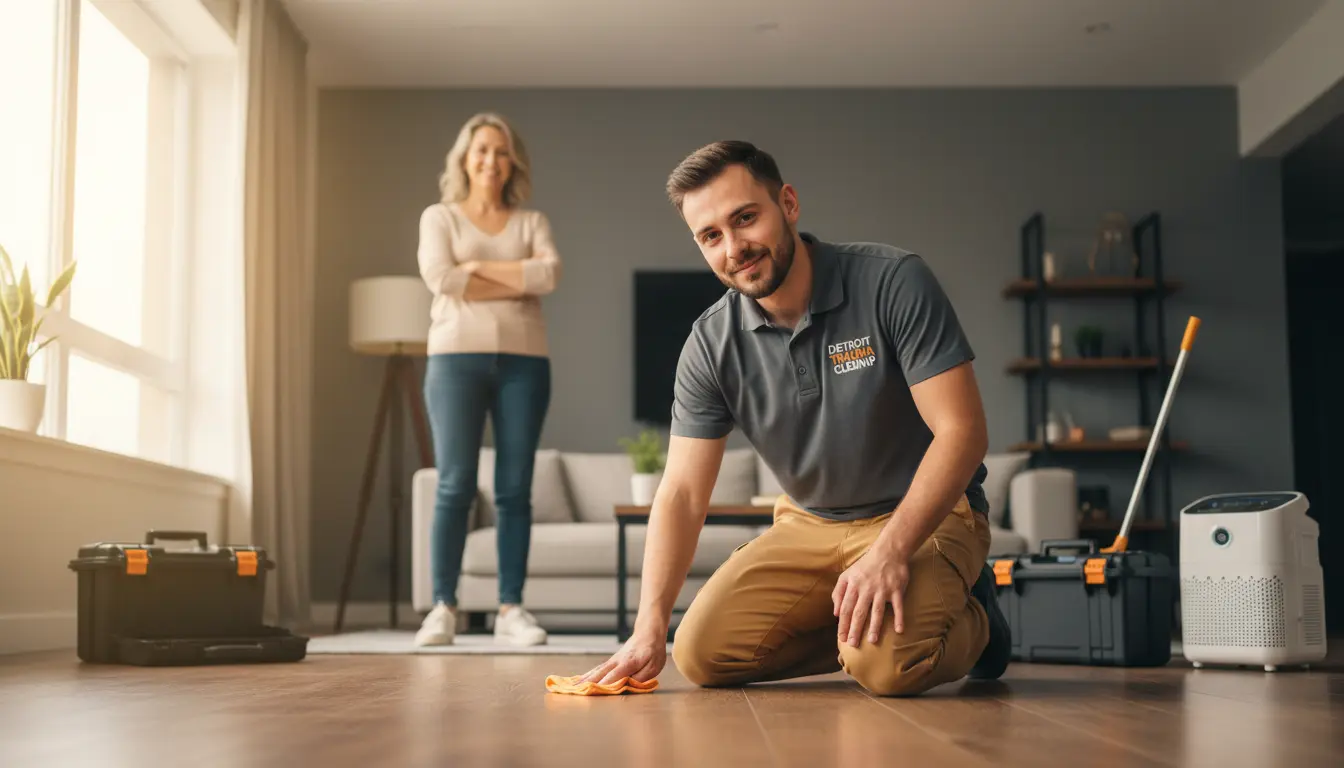
If you have ever attempted to clean a trauma scene using standard household cleaners and a mop, you have already made a costly mistake — one that can lead to tens of thousands of dollars in structural repairs, legal liability, and long-term health risks for occupants. In Detroit, where historic homes with porous plaster walls and aging HVAC systems are common, the consequences of improper remediation are magnified. A single missed pocket of bloodborne pathogens can seep into subflooring, trigger microbial growth, and compromise the entire property’s air quality. This is not a cleaning job; it is a forensic restoration process that demands specialized equipment and certified protocols.
Detroit property owners, real estate agents, and facility managers often underestimate the complexity of trauma scene remediation. They assume that bleach, gloves, and a commercial-grade vacuum are sufficient. In reality, the invisible hazards — including hepatitis B, HIV, and norovirus — can survive on surfaces for weeks or months without proper decontamination. The cost of a second remediation after a failed initial attempt far exceeds the investment in a professional service from the start. That is why Detroit Trauma cleanup uses equipment designed specifically for biohazard removal, not standard janitorial gear.
Why General Cleaning Equipment Fails in Trauma Situations
Standard cleaning equipment — such as mops, buckets, and household vacuums — is built for dirt and dust, not for infectious biological material. When blood or other bodily fluids are mopped, the porous fibers of the mop head actually spread pathogens across a larger surface area, increasing the risk of cross-contamination. Moreover, the act of mopping can aerosolize dried blood particulates, which then settle into ventilation ducts, furniture upholstery, and carpet fibers. This is a primary reason why many Detroit residences that experienced a traumatic event continue to report odors and health complaints months after a DIY cleanup.
Industrial-grade negative air machines, HEPA-filtered vacuums, and hospital-grade disinfectants are not optional — they are the minimum standard under OSHA Bloodborne Pathogens Standard 29 CFR 1910.1030. Positive air pressure during cleaning pushes contaminants into unaffected areas, whereas negative air pressure machines create a controlled environment that pulls airborne particles out of the workspace and through a series of HEPA filters. In Detroit’s older residential structures, where ductwork is often shared or poorly sealed, this containment is critical to prevent pathogens from migrating to living spaces.
The Technical Process of Professional Trauma Scene Remediation
Professional remediation follows a strict, science-backed workflow that begins with a comprehensive risk assessment. A certified technician evaluates the scene for visible and hidden biohazards, checks structural integrity, and identifies porous materials (such as drywall, carpet, and upholstery) that may require full removal. In Detroit, where winter heating cycles can cause thermal expansion and contraction in building materials, hidden biological seepage can travel through cracks in subflooring and behind baseboards, making detection even more critical.
Once the assessment is complete, the team establishes a containment zone using polyethylene sheeting and negative air pressure. This isolates the contaminated area from the rest of the property. Technicians then don full PPE — including Tyvek suits, N95 or P100 respirators, and face shields — to protect themselves from bloodborne pathogens and chemical hazards. The removal of gross biohazard waste is done using specialized tools: sharps containers for needles, biohazard bags for contaminated materials, and enzyme-based cleaners that break down organic matter at a molecular level.
After physical removal, the technician applies an EPA-registered hospital-grade disinfectant, often with a longer dwell time (10–15 minutes) to ensure viral inactivation. The surface is then tested using adenosine triphosphate (ATP) fluorescence testing, which measures the presence of organic residue. If the ATP readings exceed 30 relative light units (RLUs), the surface is recleaned and retested. Finally, the entire area may be encapsulated with a sealant to lock any remaining microscopic contaminants into the structure, preventing future odor or health risks.
Professional Remediation vs. Standard Cleaning: A Data Comparison
| Feature/Metric | Professional Biohazard Remediation | Standard Residential Cleaning |
|---|---|---|
| Regulatory Compliance | OSHA 29 CFR 1910.1030, IICRC S540, EPA waste disposal | No OSHA or EPA biohazard standards met |
| Pathogen Elimination | 99.99% reduction (ATP testing verified) | Unknown; likely <50% due to cross-contamination |
| Structural Assessment | Full inspection of porous materials, subflooring, HVAC | Visual only; no moisture or seepage detection |
| Equipment Used | Negative air machines, HEPA vacuums, enzyme cleaners, ATP meters | Mops, buckets, household bleach, standard vacuums |
| Containment | Negative pressure, polyethylene sheeting, air scrubbers | None; airborne contaminants spread freely |
| Waste Disposal | Licensed medical waste transport, incineration | Household trash; illegal and dangerous |
| Cost for a Typical Trauma Scene (Detroit) | $2,500–$10,000 depending on severity | $200–$500 for supplies, but often leads to secondary remediation costs of $5,000+ |
Expert Insights: What Professionals See That Others Miss
Experienced remediation specialists in Detroit rely on a set of diagnostic techniques that go far beyond surface cleaning. One of the most important is thermal imaging combined with moisture meters. After a traumatic event, blood and other fluids can seep into subflooring and wall cavities, especially in older Detroit homes with plaster and lath construction. A thermal camera can detect temperature differences caused by moisture, while a moisture meter verifies the presence of liquid. Without this equipment, property owners often believe the area is dry when hidden biological material is still active.
Another critical insight is the distinction between cleanable and non-cleanable surfaces. Porous materials like drywall, carpet, and upholstery cannot be fully decontaminated — they must be removed and replaced. Many property owners try to save money by cleaning these materials, only to discover that odors return within weeks due to embedded organic residues. The IICRC S540 standard explicitly states that porous materials contaminated with blood or other potentially infectious materials (OPIM) must be removed.
Common mistakes include using household bleach on biological matter. Bleach is rapidly deactivated by organic material, meaning it fails to kill pathogens on blood-soaked surfaces. Additionally, bleach fumes can be toxic in enclosed spaces, especially in tight Michigan winter conditions where homes are sealed. Another mistake is waiting for odors to dissipate naturally. Odors indicate ongoing microbial activity, and the longer the wait, the deeper the contamination penetrates. Finally, allowing untrained personnel — such as maintenance staff or family members — into the site exposes them to bloodborne pathogens without proper training or PPE, leading to potential lawsuits and health crises.
Pricing Considerations for Trauma Scene Remediation in Detroit
- Site Mobilization Fees: $250–$500 per trip, covering transportation of specialized equipment (negative air machines, HEPA vacuums, chemical agents) and the team’s travel time across Wayne County, especially during winter ice conditions that slow response.
- Hourly Remediation Rates: $150–$350 per hour, depending on the complexity of the scene. A simple unattended death in a small apartment may take 4–6 hours, while a homicide scene with extensive blood spatter and structural damage may require 12–20 hours over multiple days.
- Specialized Waste Disposal: $200–$1,000, based on the volume of biohazardous waste. All materials must be incinerated at a licensed medical waste facility, with costs rising for heavy items like carpet padding or furniture.
- Structural Repair and Replacement: $500–$5,000, covering removal of contaminated drywall, subflooring, and insulation, plus the cost of matching materials in Detroit’s historic districts where plaster and antique wood are common.
- HVAC Decontamination: $300–$2,000, required if airborne pathogens have entered the ductwork. This involves using fogging equipment with EPA-registered disinfectants and HEPA filter replacements.
Safety Standards and Certifications: Why They Matter
Every professional trauma scene remediation in Detroit must adhere to strict safety standards to protect both workers and property occupants. The most critical regulatory framework is OSHA’s Bloodborne Pathogens Standard (29 CFR 1910.1030), which mandates that all employees have a written exposure control plan, receive annual training, and use appropriate PPE. Without this, any remediation company is operating illegally and exposing themselves and their clients to severe liability.
Additionally, the IICRC S540 Standard for Trauma and Crime Scene Cleanup provides the industry-recognized best practices for structural decontamination, waste handling, and verification. Companies that are IICRC-certified — like Detroit Trauma cleanup — follow a rigorous protocol that includes ATP testing, negative air containment, and proper disposal documentation. In Detroit, the Wayne County Department of Health and the Michigan Department of Environmental Quality also regulate the transportation and disposal of biohazardous waste, requiring licensed haulers and manifests. Failure to comply can result in fines of up to $10,000 per incident, plus the cost of re-remediation.
For property owners, working with a certified company means that once the job is done, the site is safe for reoccupation. The risk of transmitting bloodborne diseases like hepatitis C or HIV is eliminated, and the property retains its market value. In a city like Detroit, where many homes are being renovated and flipped, a single failed remediation can destroy a sale or lead to a lawsuit from future buyers who discover hidden contamination.
Frequently Asked Questions About Trauma Scene Remediation
Can I use bleach to clean a trauma scene myself?
No, household bleach is not effective for disinfecting blood or bodily fluids because organic matter rapidly deactivates its active ingredient (sodium hypochlorite). Even if you use a 10% bleach solution, the dwell time required (10–15 minutes) is rarely achieved, and the chemical reaction with proteins in blood can actually fix the stain and make it harder to remove. Professional enzyme-based cleaners and EPA-registered hospital-grade disinfectants are designed to break down organic matter and kill pathogens at a molecular level. In Detroit, where older homes have porous surfaces, bleach can also damage plaster and wood, leading to additional repair costs.
How long does the remediation process take for a typical unattended death?
For an unattended death discovered within a few days, the remediation process usually takes 4–8 hours, depending on the size of the area and the extent of decomposition. If the body was not discovered for weeks or months, the process can extend to 12–20 hours over multiple days, requiring removal of saturated flooring, subflooring, and insulation. In Detroit’s climate, decomposition accelerates during summer heat (70–90°F) and slows in winter, but the odor and microbial growth can still penetrate deeply into building materials. After remediation, ATP testing is conducted to verify the site is safe.
What happens to the removed biohazard waste?
All biohazard waste — including contaminated drywall, carpet, clothing, and personal items — is placed in red biohazard bags, labeled, and transported by a licensed medical waste hauler to a permitted incineration facility. In Michigan, the waste must be tracked with manifests to ensure proper disposal. Standard trash pickup or landfill disposal of biohazard materials is illegal under both state and federal regulations. Detroit Trauma cleanup ensures that every piece of waste is documented and destroyed, protecting the property owner from future liability.
Is it safe to stay in the home after remediation?
Yes, once remediation is complete and verified through ATP testing (surface readings below 30 RLUs) and visual inspection, the area is safe for reoccupation. However, any structural repairs — such as replacing drywall or flooring — must be finished before the space is used for daily living. In cases where the HVAC system was contaminated, the ducts must be cleaned and tested before the system is turned back on. Detroit Trauma cleanup provides a certificate of remediation for insurance and legal purposes, confirming that the property meets all safety standards.
How do I choose a reliable trauma cleanup company in Detroit?
Look for certifications from IICRC and proof of OSHA compliance, including written exposure control plans. Verify that the company holds a medical waste transporter license in Michigan and carries liability insurance. Ask about ATP testing and whether they use negative air machines. Additionally, check for local references, especially in Detroit’s unique residential architecture. A reliable company will provide a detailed written estimate and explain the process step-by-step without pressure. Detroit Trauma cleanup meets all these criteria and offers discreet, 24/7 emergency response.
Professional Biohazard Remediation in Detroit
When a traumatic event occurs in a Detroit property, the immediate priority is safety, not just cleanup. The emotional weight of the situation demands a discreet, professional, and technically rigorous response. Detroit Trauma cleanup provides precisely that — a team of certified specialists who arrive with the proper equipment, follow OSHA and IICRC standards, and leave the property restored to a safe, habitable condition. We handle everything from initial risk assessment and containment to final ATP verification and waste disposal, ensuring that no hidden pathogens remain.
Our understanding of Detroit’s unique building stock, seasonal climate challenges, and local regulations means we can navigate the complexities of trauma scene remediation efficiently. Whether you are a property manager dealing with an unattended death, a homeowner facing a violent crime scene, or a real estate agent preparing a property for resale, our services deliver peace of mind. Contact Detroit Trauma cleanup today for a confidential consultation and let us handle the most difficult part of the recovery process.