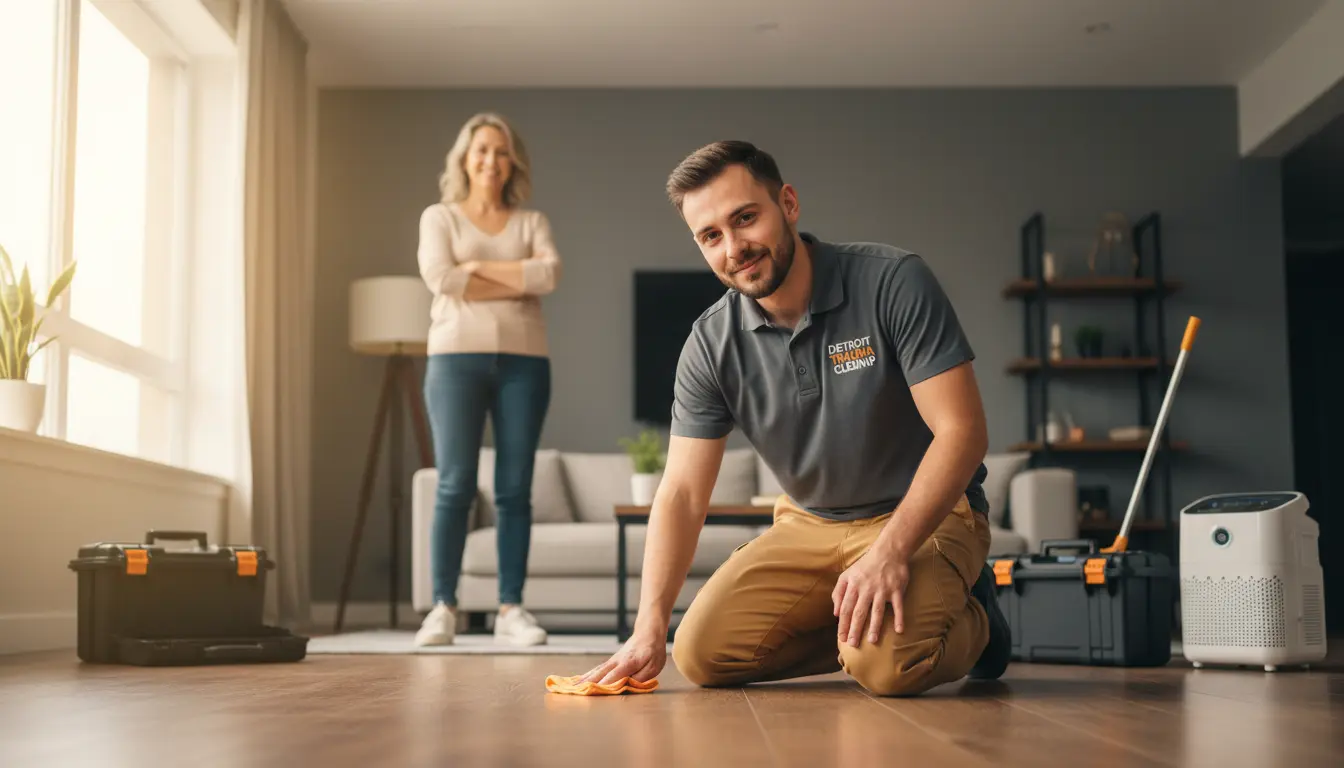
Trauma cleanup, in the strictest technical sense, is the systematic process of identifying, containing, removing, and decontaminating biohazardous materials from a site following an incident such as a violent crime, unattended death, suicide, or industrial accident. It is a specialized field of remediation that is frequently mislabeled as simply a deep cleaning or a janitorial service. The critical distinction lies in the nature of the contaminants involved: trauma cleanup deals exclusively with bloodborne pathogens, bodily fluids, and potentially infectious materials (OPIM), which require strict adherence to federal and state regulations to prevent the spread of communicable diseases like Hepatitis B, Hepatitis C, and HIV.
For business owners in Detroit, the responsibility of managing a property after a traumatic event extends far beyond emotional recovery. The physical site becomes a biohazardous environment that, if mishandled, poses significant legal, financial, and public health liabilities. Unlike a standard cleaning crew that focuses on appearance, a certified trauma remediation team operates under a regulatory framework designed to eliminate all traces of biological contamination, ensuring the space is not only visually clean but also biologically safe for reoccupation. This is not a service that can be improvised; it requires specialized training, industrial-grade equipment, and a deep understanding of local Michigan environmental health codes.
Detroit Trauma cleanup provides this exact level of technical rigor and discretion. As the premier biohazard remediation service in the region, we understand that the hours and days following an incident are critical. Our protocols are designed to restore your property to a safe, habitable condition while respecting the profound gravity of the situation. This article will guide business owners through the technical process, the regulatory standards, and the critical decisions required to navigate a trauma cleanup event in the Detroit metropolitan area.
The Technical Protocol for Site Remediation
The professional remediation of a trauma scene follows a strict, science-based workflow that prioritizes the safety of the remediation technicians, the property owner, and the surrounding community. The process begins with a remote risk assessment and a thorough site evaluation to determine the scope of contamination, the type of surfaces involved, and the presence of any airborne hazards. This initial step is critical in Detroit, where older residential architecture may contain porous materials like unsealed brick, plaster, and hardwood that absorb biological fluids differently than modern drywall and vinyl flooring.
Following the assessment, the team establishes a containment zone using polyethylene sheeting and negative air machines equipped with HEPA filtration. This creates a negative pressure environment that prevents airborne pathogens and odor particles from migrating to uncontaminated areas of the building. Technicians then don full personal protective equipment (PPE), including Tyvek suits, respirators, and face shields, in accordance with OSHA’s Bloodborne Pathogens Standard (29 CFR 1910.1030).
The actual removal process involves the physical extraction of all visible biohazardous materials. This is followed by a detailed cleaning using EPA-registered hospital-grade disinfectants that are proven effective against specific pathogens. After the initial cleaning, the team performs ATP (adenosine triphosphate) fluorescence testing to verify that all biological residue has been eliminated. This testing measures the presence of organic material on surfaces and provides a scientifically validated pass/fail result. Only after passing this test does the team proceed to structural decontamination and, if necessary, odor neutralization using ozone or hydroxyl generators.
Addressing Local Environmental Variables
Michigan’s seasonal climate presents unique challenges that directly influence the decomposition rate of organic matter and the migration of odors. During the hot, humid summer months, biological material begins to decompose rapidly, accelerating the release of volatile organic compounds (VOCs) that can permeate drywall, flooring, and HVAC systems. Conversely, during the harsh winter months, frozen conditions can slow decomposition but create difficulties in site access and equipment operation. Our teams in Detroit are trained to adapt the remediation timeline and chemical application methods based on these environmental factors, ensuring that the decontamination is effective regardless of the season.
Professional Remediation vs. Standard Janitorial Cleaning
To illustrate the profound differences between these two service categories, the following comparison is based on the IICRC S540 Standard for Trauma and Crime Scene Cleanup.
| Feature/Metric | Professional Biohazard Remediation | Standard Residential Cleaning |
|---|---|---|
| Regulatory Compliance | OSHA 29 CFR 1910.1030, EPA waste disposal, IICRC S540 | Standard workplace safety only |
| Pathogen Elimination | Hospital-grade disinfectants with verified log kill rates | Household cleaners (bleach, ammonia) |
| Structural Assessment | Identifies porous material saturation and needs for removal | Surface cleaning only; no structural evaluation |
| Waste Disposal | Incinerated or autoclaved as regulated medical waste | Standard trash disposal |
| Odor Removal | Ozone and hydroxyl technology for molecular-level odor removal | Masking agents or air fresheners |
| Post-Remediation Testing | ATP fluorescence testing for biological residue | Visual inspection only |
Expert Insights for Property Owners
Professionals in the field of forensic restoration possess a deep understanding of how biological contaminants behave within a structure. One critical diagnostic tip is to visually inspect the direction of floorboard gaps and the location of subflooring seems. Biological fluids, especially blood, are highly mobile and will follow the path of least resistance, often seeping into subfloor layers and along joists. A standard cleaner will not detect this hidden seepage, but a certified technician will know to perform a moisture mapping inspection using a non-penetrating meter to identify saturation beneath visible surfaces.
A second common oversight involves the treatment of porous materials. Drywall, carpet, upholstery, and unsealed wood cannot be effectively decontaminated once saturated with biological fluids. The porous nature of these materials allows pathogens to penetrate deep into the matrix, where disinfectants cannot reach. The only viable solution is removal and replacement. Attempting to clean these materials only creates a false sense of safety while leaving active pathogens embedded within the structure.
Another advanced technique involves the use of negative pressure during the remediation process. This is not simply a precaution but an active measure to prevent cross-contamination. By creating a pressure differential between the contaminated area and the rest of the building, we prevent airborne particles and odor molecules from migrating through doorways, hallways, and ductwork. This is particularly important in multi-unit commercial buildings or historic Detroit homes where shared ventilation systems are common.
Common Mistakes Business Owners Make
One of the most frequent errors we observe is the use of household bleach on biological matter. While bleach is a common household disinfectant, it is highly corrosive and can damage porous materials like wood and drywall, making them even more absorbent. Furthermore, bleach loses its efficacy in the presence of organic matter, meaning it cannot penetrate clotted blood or tissue. This mistake often results in a visually clean surface that remains biologically contaminated.
A second critical error is waiting for the odor to dissipate naturally. The smell of decomposition is caused by volatile organic compounds released by bacteria as they break down organic matter. These compounds can persist for weeks or months, and the odor itself is a sign that active microbial growth is occurring. Simply airing out the space will not remove the source of the contamination. Without professional intervention, the odor will permeate adjacent spaces and cause long-term indoor air quality issues.
Finally, allowing untrained personnel, such as employees or even well-meaning family members, to enter the site is a serious mistake. These individuals are not protected by the proper PPE and can easily be exposed to bloodborne pathogens through inhalation of aerosolized particles or direct contact with contaminated surfaces. This exposure carries the risk of serious communicable diseases and can lead to significant long-term health issues for the individuals involved.
Understanding Pricing Structures
- Site Mobilization Fee: This is a standard fee that covers the transportation of specialized equipment, including negative air machines, HEPA vacuums, ozone generators, and all necessary PPE, to the job site. In Detroit, this fee can range from $200 to $500 depending on the distance and the complexity of the equipment required.
- Hourly Remediation Rates: Most professional companies charge an hourly rate for the actual remediation work. This rate typically falls between $150 and $300 per technician per hour. The total number of hours depends heavily on the size of the affected area and the volume of biohazardous materials present.
- Specialized Waste Disposal: The disposal of biohazardous waste is not a simple matter of placing it in a dumpster. It must be collected in red biohazard bags, sealed in rigid containers, and transported by a licensed medical waste hauler to an approved incineration facility. This process incurs a per-pound cost that can add significantly to the overall bill, especially if large amounts of porous materials like carpet or drywall must be removed.
Safety and Regulatory Standards
Adherence to established safety standards is not optional in the field of trauma cleanup. The primary regulatory framework is provided by OSHA’s Bloodborne Pathogens Standard (29 CFR 1910.1030), which mandates specific protocols for the handling, containment, and disposal of blood and other potentially infectious materials. This includes the requirement for an exposure control plan, mandatory training for all employees, and the provision of appropriate PPE at no cost to the worker. Failure to comply with these standards can result in severe fines and legal liability for the property owner or the company performing the work.
In addition to OSHA, the IICRC S540 Standard for Trauma and Crime Scene Cleanup provides the industry-recognized best practices for the field. This standard outlines specific procedures for cleaning, disinfection, and verification, as well as guidelines for the restoration of structural integrity. For business owners in Detroit, hiring a company that is certified to these standards ensures that the work performed is defensible, auditable, and compliant with local health department regulations. It also provides protection for the property owner in the event of future liability claims related to infectious disease transmission.
Proper waste management is another critical component of safety. All biohazardous waste generated during a remediation must be transported and disposed of by a licensed medical waste hauler. This waste is typically incinerated at high temperatures, which destroys all pathogens and renders the material harmless. Improper disposal, such as placing biohazardous materials in a standard dumpster, is illegal and poses a serious public health risk to waste management workers and the surrounding community. Our team in Detroit maintains a strict chain of custody for all waste, from the site to the incineration facility.
Frequently Asked Questions About Trauma Cleanup
What is the difference between trauma cleanup and crime scene cleanup?
While the terms are often used interchangeably, there is a technical distinction. Crime scene cleanup typically refers to the remediation of a site after a law enforcement investigation has concluded. Trauma cleanup is a broader term that encompasses any site where a traumatic event has occurred, including unattended deaths, suicides, industrial accidents, and hoarding situations. Both types of cleanup involve the same core principles of biohazard remediation, but trauma cleanup often requires a more comprehensive approach to address the emotional and structural complexities of the situation. Both are governed by the same OSHA and IICRC standards.
How long does the trauma cleanup process take?
The duration of the process varies significantly based on the size of the affected area, the volume of biological material, and the complexity of the structural contamination. A small, contained scene in a single room may be completed in a few hours, while a large, multi-room event with significant decomposition can take several days. The process is not complete until ATP testing confirms that all biological residue has been eliminated. Rushing the process to save time or money compromises the safety of the final result and is never a recommended practice. A professional company will provide a clear timeline during the initial assessment.
Is it safe to clean a trauma site myself?
No, it is not safe, and it is strongly discouraged by both OSHA and the IICRC. Cleaning a trauma site involves direct exposure to bloodborne pathogens that can cause serious, life-long diseases. Without proper PPE, training, and containment equipment, an individual is at a very high risk of infection. Furthermore, improper cleaning techniques can spread contamination to other areas of the building, creating a larger and more expensive problem. The emotional toll of cleaning a scene involving a loved one or an employee is also a significant factor that professional services are designed to alleviate.
Does insurance cover trauma cleanup?
Many commercial property insurance policies include coverage for biohazard remediation under the premises liability or property damage sections. It is important to review your specific policy and speak with your insurance adjuster as soon as possible after the incident. Some policies require pre-authorization before any work begins, while others allow for emergency remediation to be performed first. A professional trauma cleanup company will typically work directly with your insurance provider to handle the paperwork and ensure that the billing is processed correctly. They can also provide a detailed scope of work and itemized invoice for the claim.
What happens to the waste that is removed from the site?
All biohazardous waste removed from the site is collected in red, leak-proof biohazard bags and placed into rigid, puncture-resistant containers. These containers are then transported by a licensed medical waste hauler to an approved treatment facility. The most common method of treatment is incineration, which destroys all pathogens at extremely high temperatures. The ash that remains is then disposed of in a regulated landfill. This entire process is documented with a chain of custody form to ensure compliance with all federal and state regulations. This is a non-negotiable part of professional remediation.
Professional Biohazard Remediation in Detroit
Navigating the aftermath of a traumatic event is an overwhelming experience for any business owner. The emotional weight of the incident is compounded by the urgent need to restore the property to a safe, functional state. This is where the expertise of a certified biohazard remediation team becomes invaluable. Our technicians are trained not only in the technical aspects of decontamination but also in the compassionate handling of property owners and their families during a difficult time. We operate with the understanding that discretion and respect are as important as the technical precision of the work.
Detroit Trauma cleanup stands as the most practical, highly-trained, and reliable service provider in the Detroit metropolitan area. Our teams are equipped with the latest industrial-grade equipment and certified to the highest industry standards. We are also deeply familiar with the unique architectural and environmental challenges of the region, from the historic brick homes of Indian Village to the multi-unit commercial buildings in downtown Detroit. When you choose us, you are choosing a partner who prioritizes your safety, your property’s value, and your peace of mind.
If you are facing the need for trauma cleanup services, do not hesitate to reach out. We are available 24/7 to provide immediate response, comprehensive assessment, and rapid, discreet remediation. Your property and your health are our top priorities.