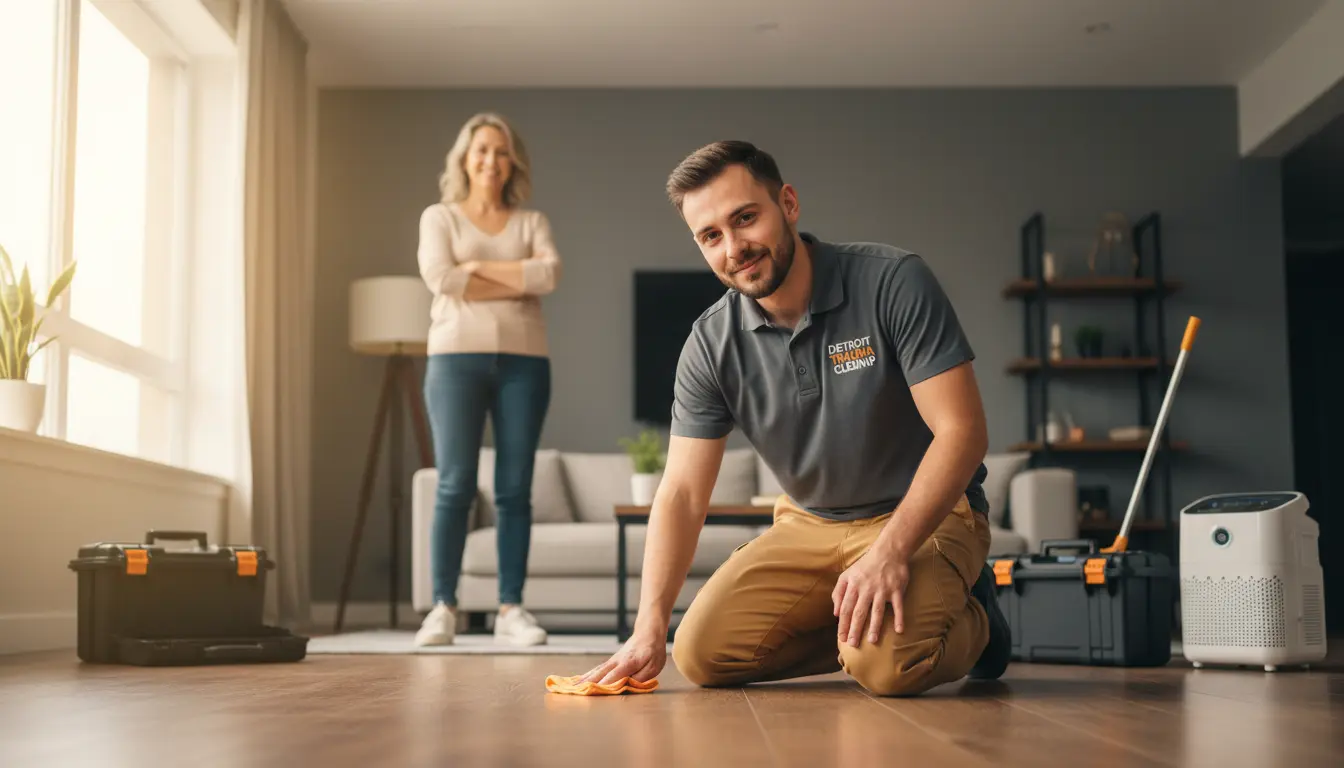
Trauma cleanup, also known as biohazard remediation, is the systematic process of removing and decontaminating blood, bodily fluids, tissue, and other potentially infectious materials from a scene following a violent crime, accident, unattended death, or suicide. It is not a housekeeping service or a janitorial task; it is a specialized field governed by strict federal and state regulations, including OSHA’s Bloodborne Pathogens Standard (29 CFR 1910.1030) and the IICRC S540 Standard for Trauma and Crime Scene Cleanup. In Detroit, where historic residential architecture and seasonal temperature extremes create unique challenges, professional biohazard remediation is essential to protect property owners, occupants, and the broader community from health risks and structural damage.
Detroit’s aging housing stock, particularly in neighborhoods like Corktown, Indian Village, and Palmer Woods, often features porous materials such as plaster, lath, and hardwood that absorb biological contaminants deeply. Meanwhile, the Great Lakes region’s dramatic temperature swings—from scorching summers to bitter winters—accelerate decomposition and odor migration, making prompt and thorough professional intervention critical. Engaging a certified trauma cleanup service in Detroit ensures compliance with local and federal standards, preserves property value, and provides discreet, compassionate restoration during a difficult time.
Step 1: Initial Risk Assessment and Site Security
Every professional trauma cleanup begins with a meticulous risk assessment. A certified technician arrives on-site, often accompanied by law enforcement or property management, to evaluate the scope of contamination, identify potential hazards (such as sharps, chemical spills, or structural instability), and establish containment zones. This phase also includes checking for the presence of bloodborne pathogens, including HIV, hepatitis B, and hepatitis C, which can remain viable for days or even weeks in dried blood or tissue.
In Detroit, winter conditions frequently complicate this step. Ice and snow can obscure exterior access points, and unheated spaces may require specialized equipment to keep cleaning solutions effective. The assessment also considers the building’s age and construction materials—for example, plaster walls in a historic home need different treatment than drywall in a modern apartment. All findings are documented for insurance and regulatory purposes, and the site is secured with warning signage to prevent unauthorized entry and cross-contamination prevention.
Step 2: Personal Protective Equipment (PPE) Protocol Initiation
Once the assessment is complete, the remediation team dons full PPE, including Tyvek suits, N100 respirators, face shields, double gloves, and steel-toed boots. This gear is not optional; it is mandated by OSHA’s Bloodborne Pathogens Standard and is designed to eliminate any skin or mucous membrane exposure to infectious materials. The team also sets up a decontamination corridor, typically using a two-step process: a dirty zone (where visible contaminants are removed) and a clean zone (where tools are sanitized and PPE is doffed).
In Detroit’s humid summers, the heat inside a sealed structure can be oppressive, but the respirator and suit remain on for the entire operation. Technicians are trained to work in short rotations to avoid heat stress, and they use cooling vests or hydration stations as needed. The PPE protocol is one of the most critical differences between professional remediation and a standard cleaning service: untrained individuals risk exposure to airborne pathogens, especially during the removal of saturated materials like carpets or upholstery.
Step 3: Physical Biohazard Removal and Structural Decontamination
With the site secured and the team protected, the physical removal of biohazardous materials begins. This involves carefully extracting blood-soaked carpet, padding, furniture, drywall, insulation, and subflooring. All waste is double-bagged in 6-mil biohazard bags and placed in rigid containers for transport to an authorized medical waste incinerator. In Detroit, waste disposal must comply with Wayne County and Michigan Department of Environmental Quality regulations, and the remediation company must hold a valid waste hauling permit.
Following removal, the team applies industrial-grade, EPA-registered disinfectants and enzyme treatments that break down organic matter at the molecular level. These chemicals are selected for their viral inactivation rates—typically achieving a 99.99% reduction in pathogens within ten minutes. Specialized equipment, such as industrial negative air machines equipped with HEPA filters, is used to create negative pressure within the containment zone, preventing airborne contaminants from spreading to adjacent rooms or HVAC systems. This step is particularly important in Detroit’s older homes, where shared ventilation ducts can carry microscopic pathogens into the entire building.
Step 4: ATP Fluorescence Testing and Verification
After thorough cleaning and disinfection, the team performs adenosine triphosphate (ATP) fluorescence testing to verify that the surface is free of microbial contamination. ATP testing uses a bioluminescence meter that measures the presence of organic residues on a swabbed surface. A reading below a specific threshold—typically 10 relative light units (RLUs) for healthcare environments—indicates that the surface is biologically clean. This scientific validation replaces guesswork and provides objective proof of remediation.
If an area fails the ATP test, the technician re-treats it with a targeted disinfectant and retests until it passes. In Detroit, where seasonal humidity can cause unseen microbial growth behind walls, ATP testing is especially valuable for detecting hidden biological seepage that plain sight would miss. Only after all surfaces pass the ATP test does the team proceed to final structural encapsulation, which may involve applying antimicrobial sealants to exposed wood or concrete to prevent future microbial remediation needs.
Data Comparison: Professional Remediation vs. Standard Cleaning
The table below highlights the critical differences between professional biohazard remediation and a standard residential cleaning service.
| Feature/Metric | Professional Biohazard Remediation | Standard Residential Cleaning |
|---|---|---|
| Regulatory Compliance | OSHA 29 CFR 1910.1030, IICRC S540, EPA Disinfectant Standards | None; no biohazard training or certification |
| Pathogen Elimination | 99.99% reduction via EPA-registered disinfectants and ATP testing | Household bleach or general cleaners; no validation |
| Structural Assessment | Full evaluation of porous materials, hidden seepage, and odor migration | Surface cleaning only; no structural damage identification |
| Waste Disposal | Authorized medical waste container and incineration | Regular trash; illegal and dangerous |
| Insurance Documentation | Detailed report with photos, testing results, and chain of custody | None; insufficient for claims |
Expert Insights for Property Owners and Managers
Professional technicians rely on diagnostic techniques that go beyond simple visual inspection. One common method is thermal imaging, which detects temperature differences behind walls that may indicate moisture from biological seepage. Another is the use of canine scent detection for human remains, particularly in unattended deaths where decomposition may have spread through crawl spaces or attics. These tools allow the team to locate and remove all contaminated materials before they cause structural rot or persistent odor.
Three critical mistakes property owners make include using household bleach on biological matter. Bleach is not a disinfectant for bloodborne pathogens at the typical dilutions used and can actually fix proteins to surfaces, making them harder to remove. Waiting for odor to dissipate naturally is another error; decomposition gases can permeate porous materials and require professional ozone or hydroxyl treatment to neutralize. Finally, allowing untrained personnel—such as well-meaning neighbors or family members—into the site before remediation is a serious liability. They risk exposure to bloodborne pathogens and may inadvertently spread contamination with their shoes or clothing.
Pricing Structure for Detroit Trauma Cleanup
Pricing for professional trauma cleanup varies based on the scope and complexity of the scene. Below are typical cost factors in the Detroit market:
- Site Mobilization Fee: A flat fee (typically $300–$600) covers the initial assessment, setup of containment equipment, and travel within the Detroit metro area. This fee is non-negotiable and ensures that a certified team arrives with all necessary PPE and cleaning agents.
- Hourly Remediation Rate: Most companies charge between $150 and $350 per hour per technician. A standard unattended death cleanup in a 1,200-square-foot home may require 8–12 hours of work, depending on the severity of decomposition and the number of rooms affected.
- Itemized Costs for Specialized Disposal: Biohazardous waste disposal is invoiced separately, often at $50–$100 per container. Larger scenes may require multiple containers, increasing the total. Additionally, if structural replacement is needed—such as removing and replacing subfloor, drywall, or insulation—those materials are billed at cost plus a handling fee.
Three primary factors influence cost: the extent of structural material replacement required (e.g., replacing hardwood floors vs. cleaning tile), the total volume of biohazardous waste (which affects disposal fees), and the necessity for specialized HVAC decontamination if the ventilation system has been compromised. Detroit’s winter conditions can also add costs if the site requires heating to prevent freezing of cleaning solutions or to stabilize the environment for ATP testing.
Safety and Standards: Training and Certifications
Every technician working on a trauma cleanup site in Detroit must hold certifications from the IICRC in Trauma and Crime Scene Remediation (TCSR) and complete OSHA 40-hour HAZWOPER training for hazardous waste operations. Additionally, the company must maintain a written bloodborne pathogen exposure control plan and provide annual training to all staff. These standards are not merely bureaucratic; they directly reduce the risk of disease transmission to workers and future occupants.
In practice, this means that the remediation team follows a strict chain of custody for all biohazardous waste, from the point of removal to the incinerator. They also use hospital-grade disinfectants that are effective against enveloped viruses like SARS-CoV-2 and non-enveloped viruses like the norovirus, ensuring that the site is safe for habitation. For Detroit property owners, working with a certified company also provides peace of mind that the work will meet insurance requirements and local health department guidelines.
Frequently Asked Questions About Trauma Cleanup in Detroit
What types of situations require professional trauma cleanup?
Professional trauma cleanup is required for any scene involving blood, bodily fluids, or tissue, including violent crimes, unattended deaths, suicides, accidents, and hoarding situations with biological hazards. In Michigan, the property owner is responsible for cleanup unless law enforcement has already contracted a service. Attempting to clean these scenes with household products is not only ineffective but also dangerous, as pathogens can survive on surfaces for days and become airborne during cleaning.
How long does the remediation process take?
The duration depends on the size of the scene and the level of contamination. A small, single-room incident may take 4–6 hours, while a full-home unattended death can require 2–3 days. Factors such as the need for structural replacement, odor neutralization, and ATP testing all add to the timeline. The team typically provides a time estimate during the initial assessment and works efficiently to minimize disruption to the property.
Is trauma cleanup covered by homeowners insurance?
Many standard homeowners insurance policies in Michigan cover trauma cleanup under the “damage to property” or “medical waste removal” clauses, but coverage varies. It is essential to notify your insurance company as soon as possible and to work with a remediation company that provides detailed documentation—including photos, ATP test results, and waste disposal receipts—to support your claim. The technician can often coordinate directly with the insurance adjuster.
Can the property be restored to its original condition?
In most cases, yes. Professional remediation can restore the property to a safe, habitable condition, though some porous materials like carpet, drywall, and insulation will need to be replaced. The goal is not to hide the event but to eliminate all biohazards, odors, and structural damage. The final encapsulation and antimicrobial treatment ensure that no residual contamination remains, making the space safe for future occupants.
Professional Biohazard Remediation in Detroit: Why Expert Care Matters
Choosing a certified trauma cleanup service in Detroit is not just about following regulations; it is about protecting the health of everyone who enters the property and preserving the integrity of the building. Professional remediation ensures that every trace of biological contamination is removed, tested, and disposed of in accordance with the highest standards. The team at Detroit Trauma Cleanup brings years of experience, IICRC certifications, and a compassionate approach to every job, understanding that the emotional weight of a trauma scene demands sensitivity and discretion.
From the initial risk assessment to the final ATP test and structural encapsulation, every step is designed to provide a thorough, safe, and lasting solution. Whether you are a property manager dealing with an unattended death in a rental unit or a homeowner facing a crime scene, trusting a professional team is the only way to ensure that the space is truly restored. Contact Detroit Trauma Cleanup today for a confidential consultation and a detailed estimate—backed by science, experience, and a commitment to your safety.