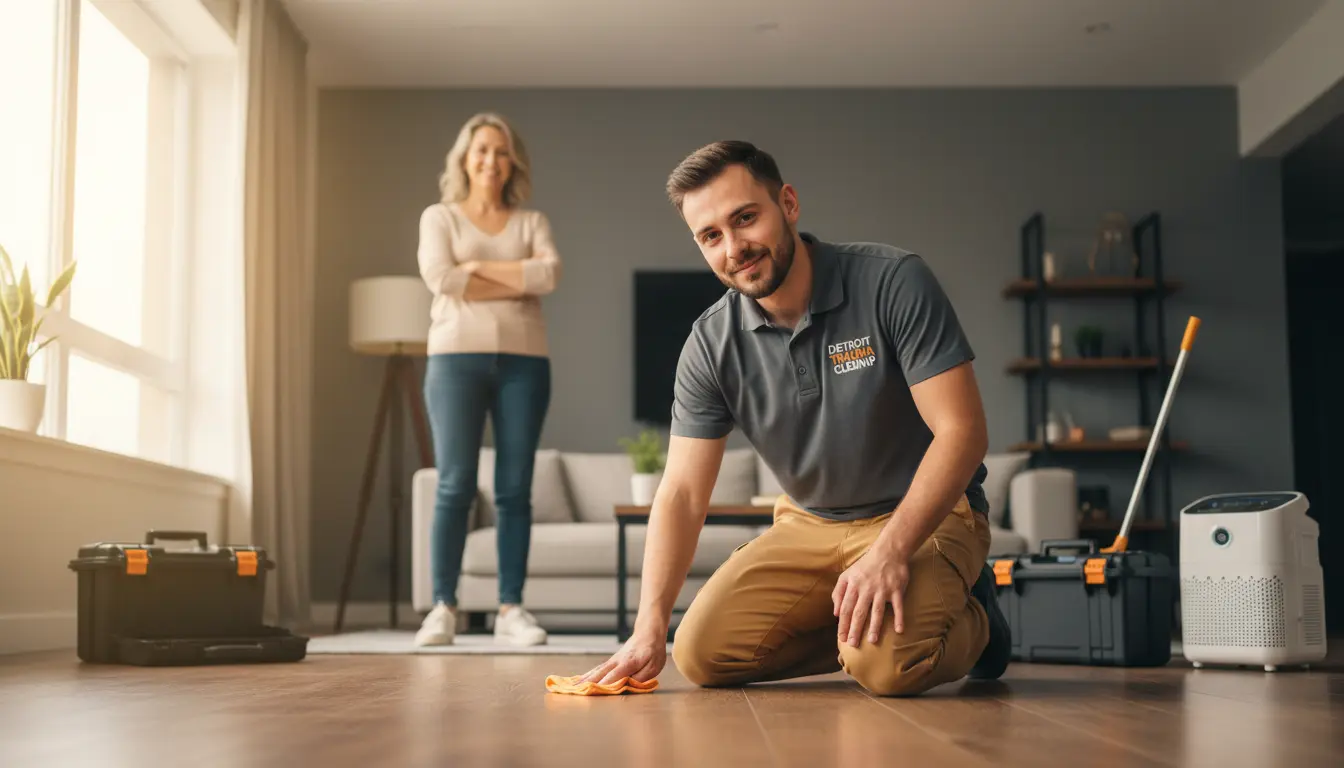
You are about to make a very expensive mistake if you believe that cleaning up a trauma scene, a biohazard spill, or an unattended death is a job for a standard cleaning crew or even a well-intentioned family member. In Detroit, where historic homes with porous wood and plaster are common, using the wrong approach can cost you tens of thousands of dollars in structural repairs, legal fines, and long-term health liabilities. The misconception that this is just a messy janitorial task has led to countless properties in Wayne County being condemned or requiring extensive forensic restoration because biological contaminants were never properly removed.
Professional biohazard remediation is a highly specialized field governed by strict OSHA, EPA, and IICRC standards. It requires advanced training, industrial-grade equipment, and a deep understanding of bloodborne pathogens, microbial remediation, and cross-contamination prevention. For property owners in Detroit, trusting amateur methods or unlicensed services is not a cost-saving measure; it is a gamble that almost always backfires. Detroit Trauma cleanup is here to set the record straight and provide the technically rigorous, discreet, and compassionate service your property deserves.
Why Standard Cleaning Fails Against Biohazards
The most pervasive misconception is that trauma cleanup is essentially a deep cleaning service. This belief stems from a lack of understanding about what biohazardous materials actually are. Blood, bodily fluids, and tissue are not just stains to be scrubbed away; they are reservoirs for bloodborne pathogens such as hepatitis B, hepatitis C, and HIV. Standard residential cleaning products, including bleach, are not EPA-registered for viral inactivation on porous surfaces. They may remove visible discoloration but leave behind infectious microorganisms that can persist for weeks, particularly in Detroit’s humid summer months or during the dry winter heating season when indoor humidity fluctuates dramatically.
Consider the typical Detroit residential architecture: plaster walls, wooden floorboards, and often unsealed concrete basements. Biological fluids seep into these porous materials through capillary action, migrating far beyond the visible stain. A standard cleaning crew lacks the adenosine triphosphate testing equipment needed to detect this hidden biological seepage. Without this validation, the property remains contaminated, posing a continuous health risk to future occupants and potentially leading to legal liability for the property owner. Professional remediation, by contrast, involves structural decontamination that may require removing and replacing porous materials entirely, followed by ATP fluorescence testing to confirm zero organic residue.
The Technical Process of Professional Trauma Cleanup
Understanding the step-by-step professional workflow helps dispel the myth that this is a simple cleaning task. Every certified trauma cleanup begins with a comprehensive risk assessment. The technician evaluates the scope of contamination, identifies all affected structural materials, and assesses environmental factors such as airflow and temperature. In Detroit, winter ice and infrastructure challenges can delay site mobilization, so a rigorous logistical plan is established to ensure containment is not compromised by extreme cold or snow.
Once the assessment is complete, a full PPE protocol is initiated. Technicians wear Level B or Level A hazmat suits, full-face respirators with HEPA filters, and multiple layers of gloves. This is not optional; it is mandated by OSHA’s Bloodborne Pathogens Standard 29 CFR 1910.1030 to protect workers from airborne pathogens and aerosolized fluids. The next phase involves physical removal of all biohazardous materials using specialized tools such as hospital-grade disinfectants, enzyme treatments designed to break down organic matter at a molecular level, and industrial-grade negative air machines that create negative pressure within the containment zone. This negative pressure prevents cross-contamination to other areas of the property by ensuring that airborne particles are filtered out before air exits the room.
Scientific Reasoning Behind Each Step
The use of negative air machines is critical because many bloodborne pathogens can become aerosolized during cleaning. Without this controlled environment, contaminants can travel through HVAC systems, infecting entire buildings. In Detroit’s older homes, where forced-air furnaces are common, this risk is particularly high. Enzyme treatments, another key tool, work by catalyzing the breakdown of proteins and lipids in biological matter. This is far more effective than bleach, which is neutralized by organic material and can even cause pathogens to become more resistant. After enzymatic cleaning, an EPA-registered chemical sanitizer is applied, followed by ATP testing. Adenosine triphosphate testing uses bioluminescence to detect remaining organic matter at the molecular level. If the reading exceeds a certain threshold, the area must be recleaned until it passes. This level of verification is simply absent in standard cleaning.
Finally, the site may require structural encapsulation. This involves applying sealants to surfaces that cannot be fully decontaminated, such as badly stained wood or unsealed concrete. This step ensures that any residual pathogens are permanently trapped and cannot be released into the environment. For Detroit properties with historic wooden floors or plaster walls, encapsulation is often the only viable alternative to complete demolition.
Professional Remediation vs. Standard Janitorial Cleaning
The table below illustrates the stark differences between professional biohazard remediation and what a standard residential cleaning service can offer.
| Feature/Metric | Professional Biohazard Remediation | Standard Residential Cleaning |
|---|---|---|
| Regulatory Compliance | OSHA 29 CFR 1910.1030, IICRC S540, EPA disposal laws | None or minimal workplace safety only |
| Pathogen Elimination | 99.99% via EPA-registered disinfectants + ATP testing | Superficial; bleach neutralized by organic matter |
| Structural Assessment | Comprehensive porosity evaluation and moisture mapping | None; visual inspection only |
| Equipment | Negative air machines, HEPA vacuums, enzyme treatments | Household mops, buckets, and spray cleaners |
| Waste Disposal | Licensed medical waste transport and incineration | Standard trash (illegal for biohazards) |
Expert Diagnostic Insights
As a certified senior specialist, I want to share three advanced diagnostic tips that separate genuine remediation from guesswork. First, hidden biological seepage is often detected using a moisture meter and thermal imaging. In Detroit’s climate, where seasonal temperature fluctuations are extreme, condensation within walls can accelerate decomposition and odor migration. Technicians must check for elevated moisture levels even in areas that appear dry, because biological fluids can travel along plumbing lines or through shared wall cavities. Second, porous materials such as drywall, carpet, and unsealed wood almost always require replacement rather than cleaning. This is not a cost-saving corner to cut. Once blood or bodily fluids penetrate these materials, no amount of cleaning can guarantee pathogen removal. The IICRC S540 standard explicitly states that porous materials in direct contact with biological waste must be removed and disposed of as medical waste. Third, the importance of negative pressure cannot be overstated. Without it, airborne pathogens can spread to adjacent rooms, creating a larger contamination zone. I have seen properties in Detroit where a single unattended death contaminated three floors because no containment was established.
Common mistakes property owners make include using household bleach on biological matter. Bleach is actually neutralized by organic material, meaning it becomes ineffective almost immediately upon contact. Waiting for odor to dissipate naturally is another error. Odors from decomposition are caused by volatile organic compounds that are also carrying pathogens. If you smell it, the contamination is still active. Allowing untrained personnel into the site, whether family members or general contractors, exposes them to serious health risks. I have personally witnessed cases where well-meaning relatives incurred thousands of dollars in medical testing after exposure to hepatitis B. These mistakes lead to long-term health risks, structural damage, and legal liability under Michigan’s property disclosure laws.
Pricing Factors for Trauma Cleanup Services
Pricing for professional biohazard remediation is often misunderstood. Many assume a flat fee exists, but the reality is that each site is unique. Standard pricing structures include a site mobilization fee, which covers the transport of equipment and personnel to your location. In Detroit, winter ice and road conditions can increase this fee due to logistical challenges. Hourly remediation rates are also common, typically ranging from $150 to $300 per hour per technician, depending on the level of hazard and required PPE. Specialized disposal of biohazardous materials is itemized separately because medical waste must be transported by authorized services and incinerated at licensed facilities, incurring per-pound fees.
Three primary factors influence total cost. The extent of structural material replacement required is the largest variable. A minor cleanup on non-porous surfaces might cost a few thousand dollars, but a full remediation involving removal of drywall, flooring, and subflooring can exceed $15,000. The total volume of biohazardous waste also matters; larger scenes generate more waste, which increases disposal costs. Finally, the necessity for specialized HVAC decontamination can add significant expense. If contaminants have entered the ductwork, the entire system must be cleaned and sanitized using antimicrobial agents, followed by air quality testing. This is common in Detroit homes where forced-air heating systems are shared across rooms.
Safety Standards and Certifications
Safety is not negotiable in this field. Professional companies like Detroit Trauma cleanup hold certifications from the IICRC in trauma and crime scene remediation, and every technician is trained under OSHA’s Bloodborne Pathogens Standard 29 CFR 1910.1030. This standard mandates specific protocols for handling blood and other potentially infectious materials, including the use of engineering controls like sharps containers and work practice controls like handwashing facilities. Additionally, we follow the EPA’s guidelines for antimicrobial pesticide use, ensuring that all disinfectants are applied at the correct concentration and contact time for viral inactivation. These certifications are not just pieces of paper; they are proof that the company has the knowledge and equipment to protect you, your family, and future occupants from communicable diseases. Without them, you are exposing yourself to liabilities that can include fines from the Michigan Department of Environment, Great Lakes, and Energy for improper waste disposal.
Frequently Asked Questions About Trauma Cleanup
Can I clean a trauma scene myself to save money?
Attempting to clean a trauma scene yourself is both dangerous and illegal in many jurisdictions. Bloodborne pathogens like hepatitis B can survive on surfaces for up to a week, and HIV can survive for several days in dried blood. Without proper PPE, you risk exposure through splashes, aerosols, or accidental needle sticks. Furthermore, improper disposal of biohazardous waste in regular trash is a violation of federal and state environmental laws, carrying fines of up to $50,000 per incident. Professional remediation ensures compliance with all regulations and guarantees that the site is safe for reoccupancy. The short-term savings are dwarfed by the potential health and legal costs.
How long does the remediation process typically take?
The duration depends on the scope of contamination. A small trauma scene in a single room can often be completed in one to two days. However, larger scenes, such as an unattended death that has been undiscovered for weeks, can require three to five days or more. This is because decomposition fluid can saturate floors, walls, and subfloors, requiring extensive structural removal and drying time. In Detroit, where historic homes may have multiple layers of flooring, the process can be lengthened. Technicians must also allow time for ATP testing, which is conducted after cleaning and before any sealing or encapsulation. Rushing the process compromises safety, so a reputable company will never provide a guaranteed 24-hour turnaround.