
Local Trauma Cleanup Experts Share Detroit Best Practices
When a traumatic incident occurs in the heart of Detroit, the aftermath can leave properties in a state of distress that’s both physically hazardous and...
Read Article
Most people assume that trauma scene cleanup is simply a deeper version of household cleaning — a matter of more bleach and a stronger stomach. The truth is far more technical, dangerous, and heavily regulated. In Detroit, where historic residential architecture and harsh seasonal conditions complicate every restoration, attempting DIY cleanup after a traumatic event can expose property owners to bloodborne pathogens, structural damage, and legal liability that far outweigh any perceived cost savings. Professional biohazard remediation is not an optional luxury; it is a critical safety and property preservation measure that requires certification, specialized equipment, and a deep understanding of forensic restoration protocols.
Detroit’s unique environment — from aging homes with porous wood and plaster to extreme winter temperatures that accelerate decomposition when indoor heating cycles — demands a localized, scientifically rigorous approach. Without proper containment and microbial remediation, biohazards can seep into subfloors, HVAC systems, and wall cavities, creating long-term health risks for occupants and future buyers. For property owners, trustees, or real estate agents facing the aftermath of an unattended death, homicide, or severe accident, the only responsible path is to engage a certified trauma scene remediation specialist who follows IICRC S540 standards and OSHA bloodborne pathogen regulations. Detroit Trauma cleanup provides that expert, discreet, and technically precise service across Wayne County.
Trauma scene restoration is classified under biohazard remediation because it involves the removal of blood, bodily fluids, human tissue, and other potentially infectious materials (OPIM). Unlike standard cleaning, which focuses on visible dirt and surface disinfection, remediation must address biological contamination at the microscopic level — including pathogens like hepatitis B, hepatitis C, HIV, and a host of bacteria that thrive in organic matter. The goal is not just to make the scene look clean but to render it biologically safe for reoccupancy.
In Detroit, the challenge intensifies due to the city’s stock of older homes built with lath and plaster, hardwood floors, and intricate woodwork. These materials are highly porous and can absorb biological fluids deep into their structure. Standard cleaning methods cannot penetrate these surfaces, leaving behind hidden reservoirs of contamination that can emit odors and harbor pathogens for years. Professional remediation involves a systematic protocol that begins with risk assessment and ends with ATP testing to verify cleanliness at the molecular level.
Every certified trauma scene cleanup follows a strict workflow designed to protect workers, occupants, and the property itself. Below is the detailed sequence a team like Detroit Trauma cleanup executes on every job in the Detroit area.
Before any cleaning begins, the team conducts a thorough walk-through to identify all contaminated areas, assess structural vulnerabilities, and determine the scope of work. This includes checking for hidden biohazards behind walls, under flooring, and inside HVAC ducts. The site is secured with barricades and signage to prevent unauthorized entry, which is critical in multi-unit buildings or homes where family members may inadvertently expose themselves. In Detroit’s winter months, this assessment also accounts for frozen pipes or ice buildup that could complicate access or create secondary hazards.
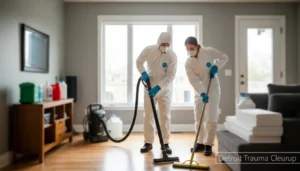
Technicians don full personal protective equipment (PPE) — including Tyvek suits, N100 respirators, face shields, and chemical-resistant gloves — to prevent exposure to airborne pathogens and chemical splashes. Negative air machines are positioned to create a controlled pressure environment, preventing cross-contamination to adjacent rooms. In older Detroit homes with drafty windows and shared ductwork, containment is particularly challenging and requires careful sealing with polyethylene sheeting and duct tape.
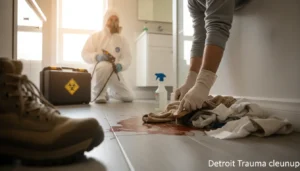
All visible blood, tissue, and bodily fluids are carefully removed using absorbent pads, scoopers, and specialized forensic cleaning tools. Contaminated porous materials — such as carpet, padding, drywall, insulation, and wooden subfloors — are cut out and double-bagged in biohazard-labeled containers for disposal at authorized medical waste facilities. Non-porous surfaces like metal or glass are cleaned but may still require chemical treatment. In Detroit’s humid summers, rapid decomposition can cause fluids to migrate downward through floorboards, requiring removal of multiple layers of material.
After bulk removal, every affected surface is treated with EPA-registered hospital-grade disinfectants proven to kill bloodborne pathogens. Enzyme-based cleaners are applied to break down organic residue that disinfectants alone cannot eliminate. These enzymes digest proteins and lipids at a molecular level, ensuring no biological matter remains to decompose and produce odors. The specific choice of chemicals depends on the surface type and degree of contamination — for example, porous wood may require a longer dwell time or a different formulation than non-porous tile.
Simply applying disinfectant does not guarantee elimination of all pathogens. Adenosine triphosphate (ATP) testing uses a swab and a handheld luminometer to detect residual organic matter on surfaces. A reading below a set threshold (typically 100 relative light units) indicates that the surface is biologically clean. This objective test is required under IICRC S540 standards and provides documented proof of remediation quality. Detroit Trauma cleanup includes ATP testing at multiple points in the process to ensure no missed spots.
Once surfaces are clean and tested, any remaining porous materials that could not be removed — such as exposed joists or subfloor edges — are sealed with a specialized encapsulant. This barrier locks in any trace contaminants and prevents future odor release. Industrial-grade hydroxyl generators or ozone machines are used to neutralize airborne odors, especially in spaces where decomposition gases have penetrated wall cavities. In Detroit’s older homes, ozone treatment must be carefully managed to avoid damaging antique woodwork or triggering fire alarms.
| Feature/Metric | Professional Biohazard Remediation | Standard Residential Cleaning |
|---|---|---|
| Regulatory Compliance | OSHA 29 CFR 1910.1030, EPA guidelines, DOT transport of biohazards | None — no knowledge of bloodborne pathogen standards |
| Pathogen Elimination | EPA-registered hospital disinfectants + ATP testing verification | Household bleach or all-purpose cleaners — insufficient kill time |
| Structural Assessment | Inspection for hidden seepage, porous material removal, negative air containment | Surface cleaning only — no detection of subfloor contamination |
| Disposal of Waste | Licensed medical waste transporter, incineration at authorized facility | Illegal — household trash or dumpster, risk of fines and exposure |
| Odor Removal | Hydroxyl generators, enzyme treatment, encapsulants | Air fresheners or open windows — temporary masking |
Professional biohazard remediation specialists rely on several advanced diagnostic techniques that go far beyond visual inspection. Understanding these can help property owners recognize why hiring a certified team is essential.
Blood and bodily fluids can migrate through cracks in concrete slabs, behind baseboards, and along wall studs without leaving any visible surface stain. Thermal imaging cameras and moisture meters detect temperature and humidity anomalies that indicate hidden saturation. In Detroit, where many homes have poured concrete basements, seepage can travel along the slab joint and require removal of a large section of flooring to fully remediate. Without this diagnostic step, contamination remains and will eventually cause persistent odors and mold growth.
Unlike non-porous surfaces, porous materials like drywall, carpet, and untreated wood absorb biological fluids into their internal structure. Washing or disinfecting these surfaces only cleans the surface layer; the interior remains contaminated. The only safe solution is removal and replacement. Professionals use measurement tools to determine the depth of penetration — for example, a blood spill on a hardwood floor may soak only the top finish or may penetrate between boards into the subfloor. Cutting and replacing the affected area prevents long-term microbial remediation failures.
During active remediation, negative air machines constantly filter the air through HEPA filters, creating a pressure differential that prevents airborne pathogens from escaping the work area. This is critical in Detroit’s dense neighborhoods, where homes share common walls or HVAC systems. Without negative pressure, cross-contamination can spread to adjacent units, exposing neighbors to biohazards and creating liability for the property owner. The machines also capture volatile organic compounds (VOCs) from decomposition, reducing odor migration.
One of the most frequent errors is using household bleach on biological matter. Bleach is corrosive, loses potency quickly in the presence of organic material, and does not penetrate porous surfaces. It also produces toxic fumes when mixed with ammonia or other cleaners. Another mistake is waiting for the odor to dissipate naturally. Decomposition odors are caused by putrescine and cadaverine gases that can be absorbed into drywall and insulation; they will not disappear on their own and may become more concentrated as the building heats up in summer. Finally, allowing untrained family members or friends to enter the site before remediation can expose them to pathogens and create emotional trauma. The consequences of these mistakes include chronic respiratory issues, structural damage requiring expensive reconstruction, and legal penalties for improper waste disposal.
Three primary factors influence total cost. First, the extent of structural material replacement: if blood has soaked through a hardwood floor into the subfloor and joists, removal and replacement of those materials adds significant labor and material costs. Second, the total volume of biohazardous waste: larger incidents involving more fluid spread require more disposal containers and longer remediation time. Third, the need for specialized HVAC decontamination: if the building’s heating and cooling system has been contaminated by airborne pathogens or odors, duct cleaning, coil disinfection, and filter replacement can add $500 to $2,000 to the project.
Every technician performing trauma scene remediation must comply with OSHA’s Bloodborne Pathogens Standard (29 CFR 1910.1030), which mandates proper training on handling OPIM, use of PPE, and exposure control plans. Additionally, the IICRC S540 standard provides a framework for trauma and crime scene cleanup that includes cleaning methodology, structural assessment, and documentation. Detroit Trauma cleanup holds both IICRC and OSHA certifications, and their crews undergo annual refresher training on the latest disinfection protocols and regulatory updates.
These standards are not bureaucratic red tape — they are practical safeguards. For example, the requirement for a written exposure control plan ensures that if a technician is accidentally stuck by a needle or splashed with blood, there is an immediate response protocol to reduce the risk of disease transmission. For property owners, hiring a certified firm means the work is insured, the waste is legally disposed, and the property is restored to a safe, habitable condition — protecting both current occupants and future buyers from communicable diseases.
No. Household bleach is not EPA-registered for bloodborne pathogen disinfection in the concentrations typically used. It also loses effectiveness rapidly when exposed to organic matter. More importantly, without proper PPE and containment, you risk exposure to hepatitis B, hepatitis C, HIV, and other pathogens that can survive for days on surfaces. Professional remediation uses hospital-grade disinfectants with proven kill times and ATP testing to verify results. Additionally, improper disposal of contaminated materials can result in fines from the Michigan Department of Environmental Quality.
The duration depends on the extent of contamination and the size of the affected area. A small incident confined to a single room may take four to eight hours, while a larger unattended death that has soaked through multiple floors can require two to three days. Factors like the need for structural demolition, HVAC decontamination, and odor neutralization also extend the timeline. Detroit Trauma cleanup provides a detailed estimate after the initial risk assessment, including a projected completion window.
Many standard homeowner’s policies cover biohazard remediation as part of the “debris removal” or “sudden and accidental” provisions. However, coverage varies widely. It is essential to contact your insurance provider immediately and request pre-authorization. Detroit Trauma cleanup works directly with insurance adjusters to provide itemized estimates and documentation required for claims. In some cases, if the trauma occurred in a rental property, the landlord’s insurance may apply.
All contaminated materials are double-bagged in red biohazard bags, labeled with the universal biohazard symbol, and transported by a licensed medical waste transporter to an authorized treatment facility in Michigan. There, the waste is either incinerated at high temperatures or autoclaved (steam-sterilized) before disposal in a designated landfill. This process is tracked with a chain-of-custody manifest to ensure compliance with federal and state regulations.
After the remediation is complete, a final ATP test is performed on all treated surfaces. The results are documented and provided to the property owner. If the readings are below the established threshold, the area is considered biologically clean. Additionally, an odor assessment is conducted to confirm no decomposition gases remain. Detroit Trauma cleanup also offers a warranty on their work, guaranteeing that if any contamination is later detected, they will return at no extra cost.
Restoring a property after a trauma scene is not a task for amateurs or general cleaning services. It requires a deep understanding of bloodborne pathogens, forensic cleaning techniques, and local regulations — combined with the compassion to handle sensitive situations discreetly. Detroit’s unique housing stock and climate make professional remediation even more critical, as hidden contamination can lead to long-term health hazards and diminished property value.
Detroit Trauma cleanup brings decades of combined experience, IICRC certification, and a commitment to restoring your property to a safe, livable condition. From the initial risk assessment to final ATP testing, their team follows the highest industry standards while treating every client with respect and confidentiality. If you are facing the aftermath of a traumatic event in the Detroit area, do not risk your health or your property — contact Detroit Trauma cleanup for expert, compassionate, and technically rigorous site restoration.
In the heart of Detroit, MI, traumatic events like crime scenes, unattended deaths, or accidents can leave behind hazardous messes that demand expert handling. Detroit Trauma Cleanup specializes in professional trauma scene cleanup services tailored to the unique needs of our community. With years of experience serving Detroit residents and businesses, we understand the emotional weight these situations carry. Our certified team arrives quickly to remove biohazards, sanitize properties, and ensure compliance with Michigan health regulations.
Why choose us for trauma cleanup in Detroit? We prioritize compassion alongside efficiency, working discreetly to minimize disruption in neighborhoods from Midtown to the East Side. Our services include blood cleanup, odor elimination, and full decontamination of homes, apartments, and commercial spaces. As a local Detroit business, we're committed to supporting our city by providing 24/7 emergency response—no job is too complex for our trained professionals using state-of-the-art equipment.
Don't let a traumatic incident overwhelm you. Detroit Trauma Cleanup is your reliable partner for restoring order and safety. Contact us at (313) 789-1565 today for prompt, reliable service that puts your peace of mind first. We're here to help Detroit heal, one cleanup at a time.

Trauma doesn't wait—neither should you. Contact Detroit Trauma Cleanup at (313) 789-1565 for 24/7 emergency response in Detroit. Get back to safety today before the situation worsens.
Expert handling of biohazards, crime scenes, and more for Detroit properties.
From the vibrant streets of Downtown Detroit to the suburbs like Warren and Dearborn, Detroit Trauma Cleanup covers Wayne County and beyond. As a locally owned business, we're deeply invested in our Detroit community, offering reliable support during your toughest times. Call (313) 789-1565 to serve your area today.
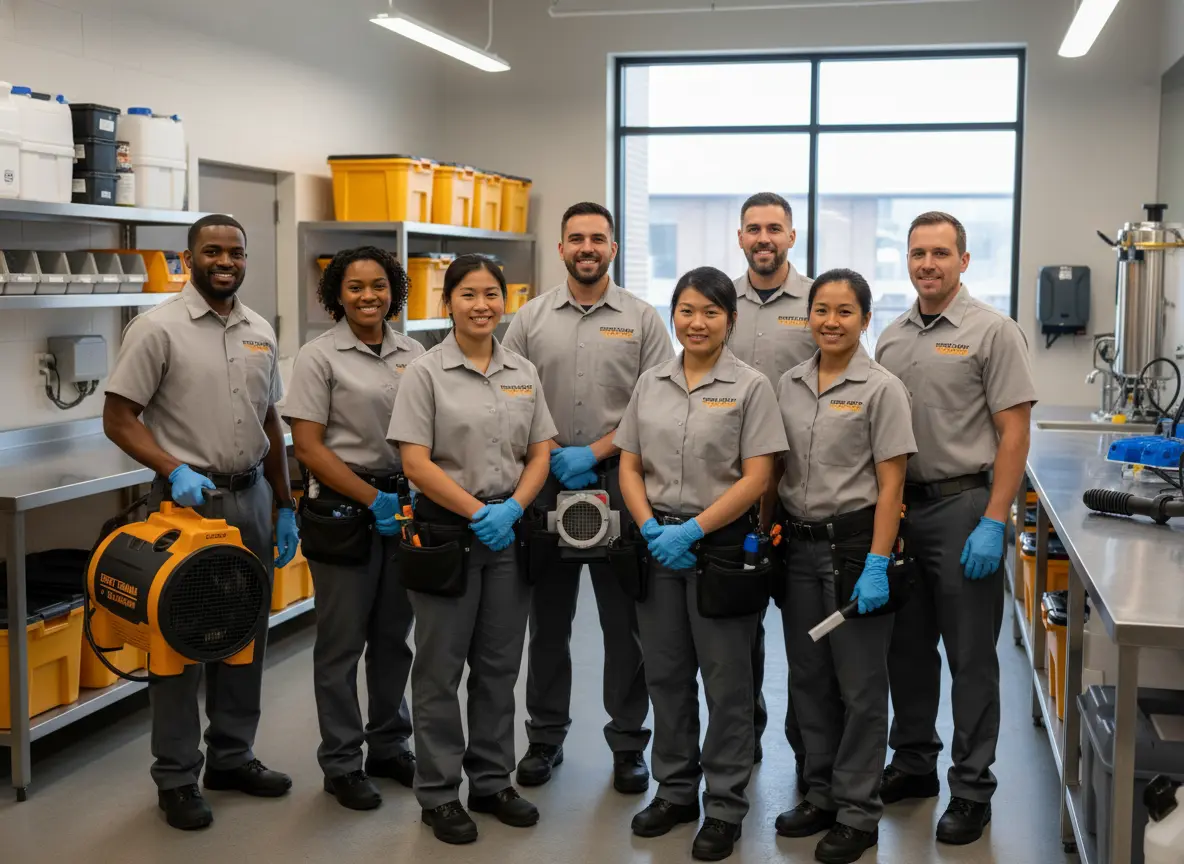
Founded in the resilient spirit of Detroit, MI, Detroit Trauma Cleanup has been serving our community for over a decade, specializing in compassionate trauma scene restoration. Our team of certified technicians brings extensive training in biohazard handling and emotional sensitivity to every job, from hoarding cleanups to suicide scene decontamination. We know the Motor City's challenges firsthand and are dedicated to providing swift, thorough services that respect privacy and restore normalcy. With a focus on local needs, we use eco-friendly products and adhere to strict safety protocols, ensuring your property is safe and sanitized. At Detroit Trauma Cleanup, our commitment is simple: we handle the mess so you can focus on healing. Call (313) 789-1565 to experience our unwavering support.
Know More About UsTrusted by homeowners across Detroit
As a licensed and insured trauma cleanup provider in Detroit, we meet all Michigan OSHA and health department standards. This protects you from liability while ensuring our team's expertise handles biohazards safely and legally every time.
Emergencies strike anytime in the D. Our round-the-clock service means we're always ready to respond quickly to trauma scenes across Detroit, minimizing stress and restoring your property without delay.
We stand by our work with a full satisfaction guarantee. If you're not completely happy with our trauma cleanup in Detroit, we'll make it right—no questions asked. Your peace of mind is our priority.
Real reviews from satisfied customers in Detroit
After a heartbreaking incident in our family home on the East Side, Detroit Trauma Cleanup arrived within hours. Their team was professional, empathetic, and left everything spotless. I can't thank them enough for handling it so discreetly. Highly recommend for anyone in Detroit needing this service.
Dealing with a crime scene cleanup was overwhelming, but these guys made it bearable. Prompt response, thorough job, and they even helped with the insurance paperwork. As a Detroit business owner, I'll call them first next time. True pros!
The compassion from Detroit Trauma Cleanup's team stood out during our accident cleanup in Midtown. They worked efficiently, explained every step, and ensured no traces remained. Affordable and reliable—grateful for local experts like them.
Stay informed with the latest Trauma cleanup tips and advice
When a traumatic incident occurs in the heart of Detroit, the aftermath can leave properties in a state of distress that’s both physically hazardous and...
Read Article
Copyright © October, 2026 Detroit Trauma cleanup. All Rights Reserved . Sitemap