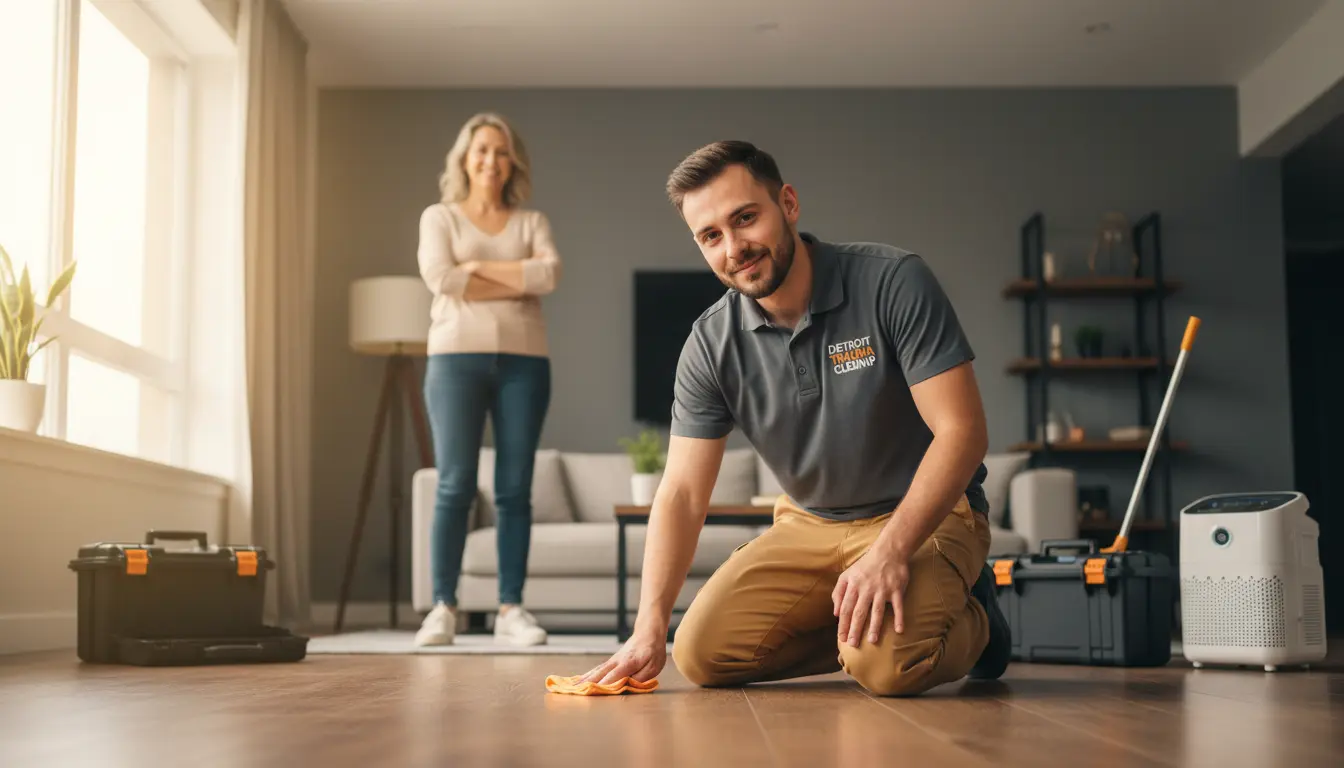
Professional biohazard remediation is not a luxury in these situations; it is a legal and public health necessity. The Occupational Safety and Health Administration classifies blood and other potentially infectious materials as Category A waste, meaning improper handling can lead to fines, liability, and transmission of bloodborne pathogens like Hepatitis B, Hepatitis C, and HIV. In Detroit, where older housing stock often features porous materials like plaster, lath, and unsealed wood, the risks multiply. A DIY cleanup with bleach and paper towels does not eliminate pathogens; it simply spreads them. Affordable trauma cleanup services near Detroit neighborhoods exist precisely to provide certified, thorough, and cost-effective remediation that protects property owners, occupants, and the community at large. Detroit Trauma cleanup is that provider.
The Technical Process of Professional Trauma Cleanup
A professional trauma cleanup follows a strict, scientifically validated workflow that begins long before any physical cleaning occurs. The first step is a comprehensive risk assessment. Our certified technicians evaluate the scene to identify all potentially contaminated materials, assess the extent of fluid migration, and determine the proper containment strategy. In a typical Detroit bungalow with forced-air heating, for example, biological aerosols can travel through ductwork and contaminate rooms far from the original incident. This assessment dictates the entire remediation plan.
Once the assessment is complete, we establish a controlled work zone. This involves sealing off the affected area with polyethylene sheeting, setting up negative air machines equipped with HEPA filtration to prevent airborne contaminants from escaping, and posting biohazard warning signs. Our technicians then don full personal protective equipment (PPE) per OSHA 29 CFR 1910.1030, including Tyvek suits, N95 or P100 respirators, face shields, and puncture-resistant gloves. This is not theater; it is the minimum standard for preventing cross-contamination. We then proceed with the physical removal of all biohazardous materials, including saturated carpet, pad, underlayment, and any porous structural components like baseboards or drywall that cannot be effectively decontaminated.
After gross removal, we apply EPA-registered hospital-grade disinfectants with proven efficacy against a broad spectrum of pathogens. We use a two-step process: first a detergent cleaner to break down organic matter, then a disinfectant with a verified contact time. In colder months, when Detroit homes are sealed tight and humidity drops, we adjust our chemical selection to ensure proper activation. We follow chemical disinfection with adenosine triphosphate (ATP) fluorescence testing. This handheld device measures the presence of organic residue on surfaces; a reading below 30 relative light units indicates a successfully decontaminated surface. If a surface fails, we re-treat and re-test until it passes. Finally, we apply an enzyme-based odor neutralizer to break down residual volatile organic compounds at the molecular level, which is critical in homes where decomposition odors have migrated into wall cavities.
| Feature/Metric | Professional Biohazard Remediation | Standard Janitorial Cleaning |
|---|---|---|
| Regulatory Compliance | Full compliance with OSHA 29 CFR 1910.1030, EPA FIFRA, and DOT 49 CFR for waste transport | No compliance with biohazard-specific regulations |
| Pathogen Elimination | EPA-registered disinfectants validated by ATP testing; >99.99% reduction of bacterial and viral pathogens | Household cleaners or bleach that do not meet hospital-grade disinfection standards |
| Structural Assessment | Moisture mapping, thermal imaging, and porosity evaluation to determine salvageability vs. replacement | Visual inspection only; no assessment of hidden biological seepage |
| Waste Disposal | Incinerated or autoclaved via licensed medical waste transporter with chain-of-custody documentation | Discarded in standard municipal trash, which is illegal and hazardous |
Expert Insights for Property Owners and Managers
Three advanced diagnostic techniques separate professional remediation from guesswork. First, thermal imaging cameras detect temperature differentials in walls and floors that indicate moisture pockets where biological fluids have wicked into insulation or framing. This is especially relevant in Detroit’s historic residential architecture, where balloon framing allows fluids to travel vertically between floors without visible evidence. Second, borescopic inspection uses a flexible camera to examine cavities behind walls, under subfloors, and inside ductwork for hidden biological material. Third, microbial air sampling before and after remediation quantifies airborne spore and bacterial counts, providing objective proof that the environment is safe for reoccupancy. These techniques are not optional; they are the standard of care under the IICRC S540 protocol.
Common mistakes property owners make include assuming that household bleach neutralizes bloodborne pathogens. Bleach is corrosive, loses efficacy in the presence of organic matter, and does not kill all pathogens, including certain non-enveloped viruses. Another frequent error is waiting for odors to dissipate naturally. Odors are caused by volatile organic compounds that continue to off-gas from contaminated materials, and they indicate active microbial activity. Delaying remediation allows these compounds to penetrate deeper into porous surfaces, significantly increasing restoration costs. Finally, allowing untrained personnel, including family members or general contractors, into the scene before professional containment is established risks cross-contamination and health liability. We have seen cases where a well-meaning relative tracked biohazard material throughout a home on their shoes, turning a single-room incident into a whole-house remediation project.
Pricing and Cost Considerations
- Standard site mobilization fees for the Detroit metro area typically range from $350 to $750, covering travel, initial risk assessment, and setup of containment and negative air equipment. These fees are higher in winter when ice and road conditions slow response times.
- Hourly remediation rates for certified technicians generally fall between $125 and $250 per hour, depending on the complexity of the scene and the number of personnel required. A typical single-room cleanup in a Detroit home takes six to twelve hours.
- Specialized disposal of biohazardous waste is charged per pound or per container, with costs ranging from $50 to $150 per disposal unit. Incineration and autoclaving are mandatory, and chain-of-custody documentation is included.
Three primary factors influence the final cost. First, the extent of structural material replacement required. If biological fluids have saturated subflooring, drywall, or insulation, those materials must be removed and replaced, which adds labor and material costs. Second, the total volume of biohazardous waste, which determines disposal fees and the number of waste containers needed. Third, the necessity for specialized HVAC decontamination. If the forced-air system was running during the incident, biological particulates may be lodged in ductwork, requiring duct cleaning and antimicrobial fogging. Affordable trauma cleanup services near Detroit neighborhoods are designed to be cost-transparent, with itemized estimates provided before any work begins.
Safety and Industry Standards
Every technician we deploy is certified under the IICRC S540 standard for trauma and crime scene cleanup and completes annual training on OSHA’s Bloodborne Pathogens Standard 29 CFR 1910.1030. This training covers proper use of PPE, sharps disposal, spill management, and post-exposure protocols. We also comply with the Michigan Department of Environment, Great Lakes, and Energy (EGLE) regulations for the transport and disposal of medical waste, which requires using a licensed hauler and maintaining a detailed waste manifest for every job.
These standards are not bureaucratic hurdles; they are life-saving protocols. In real-world scenarios, they prevent the transmission of Hepatitis B, which can survive on dry surfaces for up to seven days, and Hepatitis C, which remains infectious at room temperature for up to four weeks. By following these protocols, we protect not only the property owner and future occupants but also our own staff, first responders, and waste disposal workers. For property owners, hiring a certified provider also protects their insurance coverage. Many homeowners’ and commercial property policies explicitly exclude coverage for damages resulting from improper cleanup of biohazardous materials. Using a professional service ensures that your claim is handled correctly and your property retains its value.
Frequently Asked Questions About Trauma Cleanup
What exactly does a trauma cleanup service handle?
Trauma cleanup, also known as biohazard remediation, involves the safe removal, disinfection, and disposal of blood, bodily fluids, tissue, and other potentially infectious materials from a property. This includes scenes of unattended death, suicide, homicide, industrial accidents, and hoarding environments where biological hazards accumulate. The process goes far beyond standard cleaning; it requires specialized training, equipment, and waste disposal procedures to eliminate all pathogens and restore the property to a safe, habitable condition. Every job is handled with strict adherence to OSHA, EPA, and IICRC standards.
Can I clean up a trauma scene myself to save money?
Cleaning a trauma scene without professional training and equipment is illegal in many jurisdictions and poses serious health risks. Household bleach does not effectively eliminate bloodborne pathogens, and improper waste disposal can result in environmental fines. Furthermore, hidden contamination in subflooring, wall cavities, and HVAC systems can lead to long-term health issues for occupants, including respiratory problems and infections. The cost of professional remediation is an investment in safety and legal compliance, and affordable trauma cleanup services near Detroit neighborhoods are structured to be accessible without cutting corners on safety.
How long does a typical trauma cleanup take?
The duration depends on the size of the affected area, the extent of contamination, and the type of surfaces involved. A single-room cleanup in a Detroit home typically requires one to two days, including setup, biohazard removal, disinfection, ATP testing, and odor neutralization. Larger scenes or those involving multiple rooms can take three to five days. We always provide a timeline estimate during the initial assessment and communicate any changes as work progresses. Delays are rare but can occur if hidden contamination is discovered during the process, which is why our initial assessment includes thermal imaging and moisture mapping to minimize surprises.
Is trauma cleanup covered by homeowners insurance?
Many homeowners’ insurance policies cover trauma cleanup under their personal property or liability provisions, especially when the incident is accidental or unexpected. However, coverage varies by policy and insurer. We recommend contacting your insurance agent immediately after the incident and before hiring a cleanup service. We work directly with insurance companies to provide detailed documentation, including chain-of-custody waste manifests, ATP test results, and itemized invoices, to support your claim. Some policies may require pre-approval, and we can coordinate with your adjuster to ensure the process is smooth. If you do not have insurance, we offer transparent, itemized pricing so you understand every cost upfront.
Professional Biohazard Remediation in Detroit
When a traumatic event leaves behind biological hazards, the priority is restoring safety and peace of mind. Detroit Trauma cleanup provides affordable trauma cleanup services near Detroit neighborhoods that combine technical rigor with compassion. Our team is IICRC-certified, OSHA-compliant, and deeply familiar with the unique challenges of Detroit’s residential and commercial properties, from historic wood-framed homes in Corktown to modern apartment complexes in Midtown. We handle every aspect of remediation, from initial containment to structural restoration and odor removal, and we work directly with insurance providers to streamline the process.
If you or someone you know is facing the aftermath of a traumatic incident, do not attempt to handle it alone. The health risks, legal liabilities, and hidden damage are too significant. Contact Detroit Trauma cleanup for a confidential consultation and a detailed, itemized estimate. We respond 24/7, 365 days a year, and we treat every property as if it were our own. Your safety is our standard.