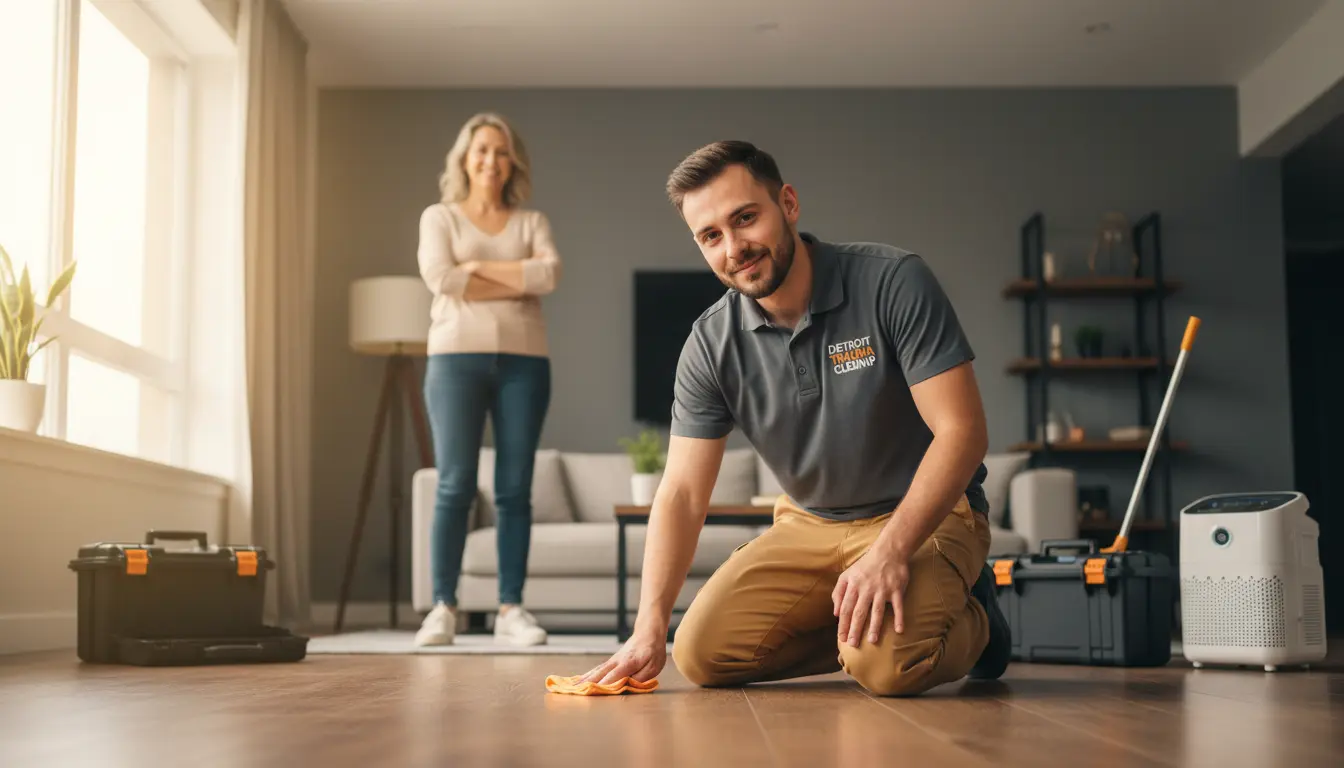
You have just discovered a trauma scene on your Detroit property. Your first instinct may be to grab bleach, mop it up, and air out the room. That single decision could cost you tens of thousands of dollars in structural damage, legal liability, and long-term health consequences for anyone who enters that space. In Michigan, where seasonal freeze-thaw cycles and humid summers accelerate biological degradation, improper cleanup is not just a mistake—it is a hazard that can render a home uninhabitable.
Professional biohazard remediation is the only safe and legally compliant path. Detroit Trauma cleanup provides authoritative, discreet, and technically rigorous site restoration that protects property value and human health. This trauma cleanup checklist for homeowners and property managers outlines every critical step required to restore a site to safe, habitable conditions.
Initial Risk Assessment and Site Stabilization
The first step in any trauma cleanup is a thorough risk assessment conducted by a certified specialist. In Detroit, this begins with evaluating the type of biological material present, the extent of contamination, and the structural characteristics of the property. Older homes in neighborhoods like Indian Village or Boston-Edison often feature porous materials such as plaster and lath, hardwood floors with gaps, and unsealed brick—all of which can absorb biohazardous fluids deeply.
The assessment also addresses immediate safety concerns. Bloodborne pathogens such as hepatitis B, hepatitis C, and HIV can survive on surfaces for days or even weeks. The site must be secured to prevent unauthorized entry. Negative air pressure is established using industrial-grade negative air machines to contain airborne contaminants. This step alone prevents cross-contamination to other areas of the property and protects neighboring units in multi-family buildings common in Detroit’s urban landscape.
Personal Protective Equipment Protocol
Once the assessment is complete, the remediation team dons appropriate personal protective equipment (PPE). This includes Tyvek suits, nitrile gloves, full-face respirators with HEPA filters, and protective footwear. In Detroit’s winter conditions, where ice and snow can complicate site access, additional layers and slip-resistant gear are essential. The PPE protocol follows OSHA’s Bloodborne Pathogens Standard 29 CFR 1910.1030, ensuring no team member is exposed to infectious materials.
Physical Removal of Biohazard Materials
With the site secure and the team protected, physical removal begins. This is not a surface-wipe operation. All contaminated materials—including carpet, padding, drywall, insulation, and subflooring—are cut out and removed. For Detroit properties with historic plaster walls, special care is taken to avoid damaging unaffected adjacent areas. The goal is to eliminate any material that cannot be thoroughly disinfected and to prevent future microbial growth.
Removed materials are double-bagged in Biohazard-labeled bags and transported to authorized medical waste disposal facilities. Michigan Department of Environmental Quality regulations require specific tracking for this waste. The remediation team ensures all paperwork is completed correctly, protecting the property owner from potential fines or legal issues.
Chemical Sanitization and ATP Testing
After gross removal, the remaining surfaces undergo a multi-step cleaning process. Hospital-grade disinfectants that are EPA-registered for bloodborne pathogens are applied. These chemicals must maintain a specific dwell time—typically 10 to 15 minutes—to achieve viral inactivation and bacterial kill. In Detroit’s variable indoor humidity, which can shift drastically during heating season, the team monitors moisture levels to ensure proper drying and prevent mold activation.
Verification of cleanliness is achieved through adenosine triphosphate (ATP) fluorescence testing. A swab sample is taken from cleaned surfaces and placed into a luminometer. If the ATP level exceeds the threshold established by the IICRC S540 Standard, the area is re-cleaned and re-tested. This scientific validation ensures that no biological residue remains, even on surfaces that appear visually clean.
Structural Encapsulation and Odor Neutralization
Finally, any remaining porous surfaces that cannot be removed—such as structural beams or concrete floors—may require encapsulation with a specialized sealant. This prevents any residual odor or microbial activity from reaching the living space. In Detroit’s older homes, where odors can migrate through shared ventilation systems or unsealed crawl spaces, this step is critical. Industrial-grade ozone generators or hydroxyl generators are used to neutralize persistent organic odors, leaving the property fresh and safe for occupancy.
Professional Remediation vs. Standard Janitorial Cleaning
| Feature/Metric | Professional Biohazard Remediation | Standard Residential Cleaning |
|---|---|---|
| Regulatory Compliance | Follows OSHA, EPA, IICRC S540, and Michigan DEQ waste disposal rules | No regulatory framework; may violate hazardous waste laws |
| Pathogen Elimination | EPA-registered hospital-grade disinfectants with verified ATP testing | Household bleach or general cleaners; insufficient dwell time |
| Structural Assessment | Identifies hidden seepage and porous material absorption; replaces or encapsulates | Surface cleaning only; leaves biological material inside walls and subfloors |
| Waste Disposal | Authorized medical waste transporter; proper manifest documentation | Improper disposal in regular trash; legal and health hazard |
Source: IICRC S540 Trauma and Crime Scene Cleanup Standard
Expert Insights: Advanced Diagnostic Tips
Detecting hidden biological seepage requires more than visual inspection. In Detroit’s historic homes, fluids can wick along wooden floor joists or behind baseboards, leaving no visible stain on the surface. A certified specialist uses moisture meters and thermal imaging to identify elevated moisture levels that indicate contamination. This step is often missed by untrained cleaners, leading to long-term odor and microbial growth.
Porous materials like untreated wood, fabric, and drywall cannot be fully sanitized if they have absorbed biological fluids. Even after chemical treatment, the core of the material may still harbor pathogens. The only safe solution is removal and replacement. This is why professional remediation often involves demolition of several feet beyond the visible stain—a practice known as “zoning.”
Negative pressure containment is not optional. Without it, airborne pathogens can spread through HVAC systems to every room in the property. In Detroit’s multi-family buildings, this can affect adjacent units. Professional teams use negative air machines with HEPA filtration to create a pressure differential that keeps contaminants inside the work zone.
Common Mistakes Property Owners Make
Using household bleach on biological matter is ineffective and dangerous. Bleach is inactivated by organic material and does not have the required dwell time for pathogen kill. It also releases toxic fumes when mixed with other cleaning agents. Property owners who attempt this often cause chemical burns to themselves and fail to decontaminate the area.
Waiting for odor to dissipate naturally is a critical error. Odors from decomposition are caused by volatile organic compounds (VOCs) that indicate ongoing microbial activity. The longer the site remains uncleaned, the deeper the contamination penetrates, and the higher the cost of remediation. In Detroit’s humid summers, odor migration can become severe within 24 hours.
Allowing untrained personnel into the site exposes them to bloodborne pathogens. Family members, friends, or even general contractors without proper PPE and training are at risk of infection. This also creates legal liability for the property owner if those individuals become ill or if the site is not properly restored for future occupancy.
Pricing for Trauma Cleanup in Detroit
Professional trauma cleanup is not a one-size-fits-all service. Pricing reflects the complexity and risk of each project. Typical cost structures include:
- Site mobilization fee: $500–$1,500 to cover travel, equipment setup, and containment setup in the Detroit metro area, including potential winter logistics for ice-covered roads and equipment transport.
- Hourly remediation rates: $150–$300 per hour per technician, depending on the level of hazard and required PPE. A typical trauma scene may require 2–4 technicians for 4–8 hours.
- Specialized disposal fees: $200–$600 for biohazard waste transport and incineration, based on total volume and weight.
Three major factors influence the final cost. The extent of structural material replacement: if drywall, flooring, and insulation must be removed across multiple rooms, costs rise significantly. The total volume of biohazardous waste: larger volumes require more handling and disposal fees. The necessity for specialized HVAC decontamination: if the HVAC system was contaminated, duct cleaning or replacement may be required, adding several thousand dollars. For accurate pricing, a site inspection is essential.
Safety and Standards
Every trauma cleanup operation must comply with strict certifications and protocols. Detroit Trauma cleanup holds IICRC certifications in trauma and crime scene remediation, ensuring our team is trained to the highest industry standards. We adhere to OSHA’s Bloodborne Pathogens Standard 29 CFR 1910.1030, which mandates proper PPE, exposure control plans, and hepatitis B vaccination for all technicians.
Waste disposal follows Michigan’s medical waste regulations. We use only authorized waste management services that provide chain-of-custody documentation. This protects property owners from future liability if biological waste is discovered improperly disposed. Our commitment to safety extends to post-remediation verification, including ATP testing and third-party air quality monitoring when required.
Frequently Asked Questions About Trauma Cleanup
Can I clean up a trauma scene myself to save money?
Attempting DIY cleanup of a trauma scene is dangerous and often illegal. Bloodborne pathogens can survive on surfaces for days and can be transmitted through broken skin or mucous membranes. Without proper PPE, you risk infection. Furthermore, improper disposal of biohazardous waste violates Michigan DEQ regulations and can result in fines. Professional remediation ensures safety and compliance, and the cost is far less than the potential medical and legal consequences.
How long does the trauma cleanup process take?
The duration depends on the scope of contamination. A single-room incident typically takes 4–8 hours for removal, cleaning, and verification. Larger scenes involving multiple rooms or significant structural damage can require multiple days. Factors like winter weather in Detroit, which can delay equipment setup and drying times, also play a role. Our team provides a realistic timeline after the initial assessment.
Will my homeowner’s insurance cover trauma cleanup?
Many homeowner’s insurance policies cover trauma cleanup under vandalism or malicious mischief clauses, or under sudden and accidental damage provisions. However, coverage varies. We recommend contacting your insurance provider immediately and requesting a specialist adjuster. Detroit Trauma cleanup can provide detailed documentation and invoices to support your claim. We also work directly with property managers to coordinate with their commercial policies.
What happens to the property after cleanup?
After remediation, the property is safe for occupancy. However, structural repairs such as drywall replacement, painting, and flooring installation may be needed. Our team focuses solely on biohazard removal and sanitization. We can recommend licensed contractors in Detroit who specialize in post-remediation restoration. The final step is a certificate of sanitation, which provides documented proof that the site meets IICRC standards.
Professional Biohazard Remediation in Detroit
Restoring a property after a traumatic event requires more than technical skill—it demands discretion, compassion, and unwavering adherence to safety standards. Detroit Trauma cleanup brings all of these elements together, serving homeowners and property managers across the city with efficiency and respect. Our team is certified, insured, and deeply familiar with the unique challenges of Detroit’s housing stock and climate.
When you follow this trauma cleanup checklist for homeowners and property managers, you ensure that no detail is overlooked. From the initial risk assessment to final ATP verification, every step is designed to protect people and property. Do not leave the safety of your building to chance. Contact Detroit Trauma cleanup for a confidential consultation and let us restore your property to a safe, livable condition.