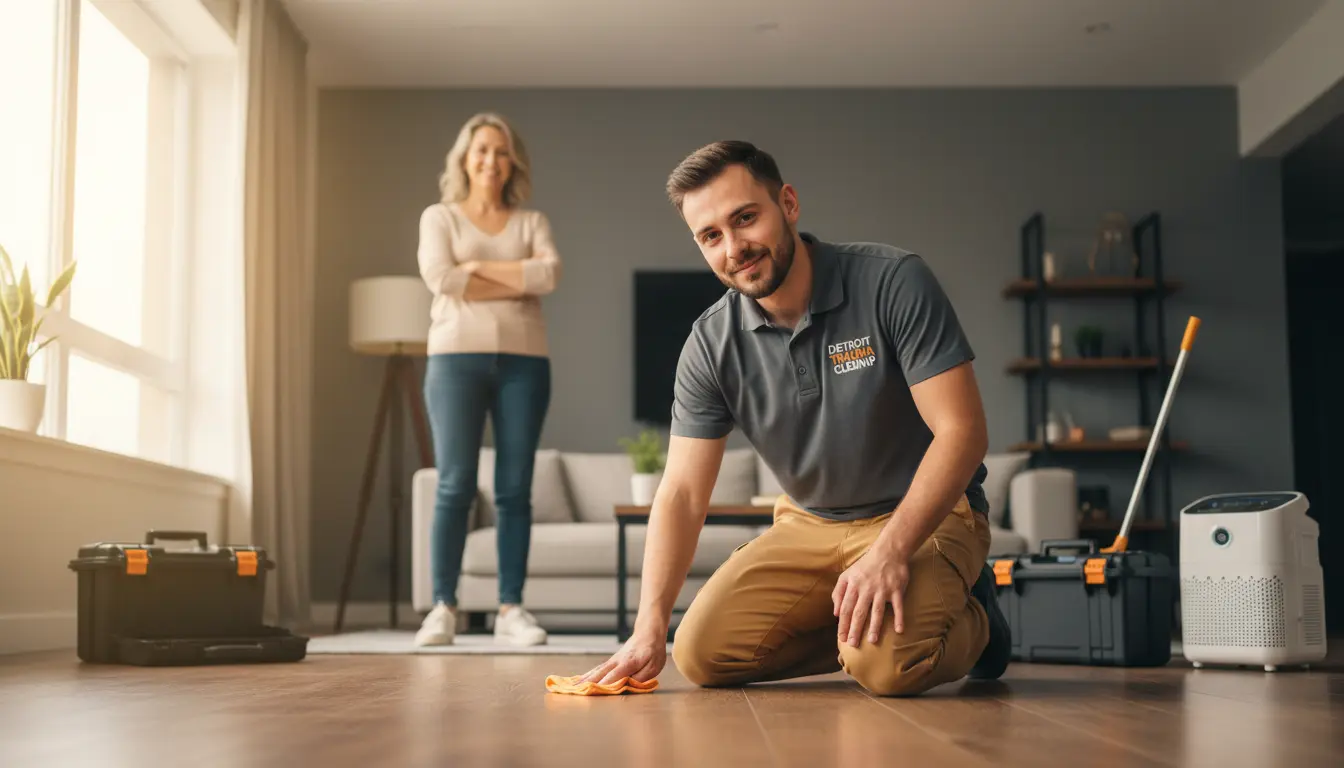
Most people assume trauma cleanup is simply a more thorough version of a standard house cleaning. In reality, the line between a professional biohazard remediation and a janitorial service is as wide as the Detroit River. The costs involved are not arbitrary; they are driven by a strict set of scientific, regulatory, and structural factors that most homeowners never consider until they receive the invoice. Understanding these factors before a tragedy occurs can save property owners thousands of dollars and prevent dangerous long-term consequences.
Detroit’s unique housing stock—aging brick homes, porous wood floors, and basement layouts that trap moisture—combined with the region’s dramatic seasonal shifts in temperature and humidity, creates a complex environment for biological decomposition and contamination spread. The cost of trauma cleanup in Detroit is not just about the visible blood or bodily fluids; it is about the hidden seepage into subflooring, the microbial growth that accelerates in Wayne County’s humid summers, and the logistical challenges of mobilizing a containment team during a winter ice storm. For property owners, estate executors, and landlords, knowing what drives these costs is the first step toward making informed, responsible decisions. Detroit Trauma cleanup provides the most thorough, compliant, and discreet remediation services in the area, ensuring that every site is restored to a safe, habitable condition.
The Technical Process That Drives Cost
Professional trauma remediation follows a tightly controlled workflow that goes far beyond what any standard cleaning crew can provide. The process begins with a comprehensive risk assessment conducted by a certified supervisor who evaluates the scene for bloodborne pathogens, structural damage, and potential chemical hazards. This assessment determines the level of personal protective equipment (PPE) required—typically Level C or higher, including Tyvek suits, full-face respirators, and nitrile gloves—which must be donned in a specific sequence to prevent self-contamination. The cost of this PPE, which is disposed of after a single use, adds significantly to the overall project expense.
Next comes the physical removal of all biohazardous materials. This is not a matter of scrubbing stains. The remediation team uses industrial-grade negative air machines to create a controlled environment that prevents airborne contaminants from migrating to other parts of the property. Hospital-grade disinfectants, often containing accelerated hydrogen peroxide or quaternary ammonium compounds, are applied to achieve a 99.9999% reduction in pathogens. After cleaning, adenosine triphosphate (ATP) fluorescence testing is conducted to verify that no biological residue remains on surfaces. In Detroit’s older homes, where porous materials like plaster, lathe, and unsealed hardwood are common, the remediation often extends into structural decontamination—removing sections of flooring, drywall, or insulation that cannot be fully sanitized. Each of these steps requires specialized equipment and training, directly influencing the final cost.
Michigan’s climate plays a critical role in the complexity of the job. During the winter months, indoor heating systems can dry out bodily fluids and create a fine dust that carries pathogens into HVAC ducts, requiring ductwork decontamination. Conversely, the humid summer months accelerate decomposition and microbial growth, increasing the volume of waste and the need for enzyme treatments to break down organic matter. These seasonal factors are unique to the Great Lakes region and are a key reason why costs can vary widely between a Detroit property and one in a drier climate.
| Feature/Metric | Professional Biohazard Remediation | Standard Residential Cleaning |
|---|---|---|
| Regulatory Compliance | Full compliance with OSHA 29 CFR 1910.1030, EPA waste disposal regulations, and IICRC S540 standards. | No regulatory oversight for bloodborne pathogens or hazardous waste. |
| Pathogen Elimination | Hospital-grade disinfectants, ATP testing, and negative pressure containment achieve 6-log pathogen reduction. | Household bleach and general cleaners only reduce surface bacteria by 2-log; viruses and prions may survive. |
| Structural Assessment | Forensic restoration experts evaluate subflooring, insulation, and HVAC for hidden contamination. | Visual inspection only; no testing for biological residue or microbial growth behind surfaces. |
| Waste Disposal | All biohazard waste is transported in licensed vehicles to authorized treatment facilities (e.g., incineration). | Waste is typically bagged and placed in standard trash, violating federal transport regulations. |
Source: IICRC S540 Trauma and Crime Scene Cleanup Standard
Expert Insights on Hidden Costs and Common Errors
Experienced remediation specialists in Detroit rely on advanced diagnostic techniques to uncover contamination that would otherwise drive up long-term costs. Three key insights are essential for property owners to understand. First, biological fluids can seep through cracks in concrete slabs and into the soil beneath a home. This hidden seepage may require soil removal and replacement, a process that adds thousands to the project but is critical for preventing odor recurrence and microbial growth. Second, porous materials like carpet, padding, and unfinished drywall almost always require replacement rather than cleaning. The IICRC S540 standard clearly states that porous items contaminated with blood or bodily fluids cannot be reliably disinfected and must be removed. Attempting to clean them only spreads the contamination and creates a future liability. Third, maintaining negative air pressure throughout the remediation prevents cross-contamination to adjacent rooms or HVAC systems. A breach in containment can double the scope of work and cost.
Common mistakes made by property owners further inflate expenses. Using household bleach on biological matter is ineffective and actually creates a chemical reaction that can fix stains and pathogens to surfaces, making professional remediation more difficult. Waiting for odors to dissipate naturally is another error; odors are carried by volatile organic compounds that indicate active microbial growth, which will only spread over time. Allowing untrained personnel—such as family members or well-meaning neighbors—into the site before professional arrival can contaminate additional areas and introduce new biohazards through their clothing and shoes. Each of these mistakes can add between 20% and 40% to the final cleanup bill due to expanded scope and additional decontamination steps.
Pricing Factors and Realistic Cost Structures
The cost of trauma cleanup in Detroit is typically broken down into several components. While every incident is unique, pricing generally starts with a site mobilization fee that covers the transportation of equipment, the team’s time from the dispatch center, and the initial assessment. This fee usually ranges from a few hundred dollars to over a thousand, depending on the distance and urgency. Hourly remediation rates for certified technicians fall between $150 and $300 per hour, with a minimum number of hours charged per shift. Specialized disposal of biohazardous waste is billed per pound or per container, and the cost includes the licensing, transport, and incineration fees required by Michigan state regulations.
Three major factors have the strongest influence on total cost:
- Extent of structural material replacement: The more porous the materials affected—such as hardwood floors, plaster walls, or insulation—the greater the need for removal and replacement. In a typical Detroit bungalow, replacing a section of subflooring and adjacent drywall can cost between $2,000 and $8,000 depending on square footage and labor rates.
- Total volume of biohazardous waste: Larger incidents, such as unattended deaths where decomposition has progressed for days or weeks, generate a significantly higher waste volume. The cost to dispose of each biohazard waste bag is around $50 to $150, and a single incident can produce multiple bags.
- Necessity for specialized HVAC decontamination: If biological matter has entered the ductwork—common in Detroit homes with forced-air heating—the entire HVAC system must be cleaned and treated. This can add $1,500 to $4,000 to the project and requires certified duct-cleaning technicians working in tandem with the remediation crew.
Safety Standards and Certifications That Protect You
Every professional trauma remediation in Detroit must adhere to rigorous safety standards designed to protect both the workers and the property’s future occupants. The most critical certification is the IICRC S540 standard for trauma and crime scene cleanup, which outlines the proper procedures for containment, cleaning, disinfection, and waste disposal. Technicians must also have annual training in the OSHA Bloodborne Pathogens Standard (29 CFR 1910.1030), which governs the safe handling of materials that may contain hepatitis B, HIV, or other infectious diseases. Without these certifications, property owners assume substantial legal and health risks. For example, if a cleaning crew improperly disposes of biohazard waste in a standard dumpster, the property owner can face fines from the Michigan Department of Environmental Quality and potential lawsuits from waste management workers. Authorized waste management services, such as those used by Detroit Trauma cleanup, ensure that all materials are transported in sealed, labeled containers to licensed incineration facilities, providing a full chain of custody documentation.
How long does trauma cleanup typically take in Detroit?
The duration depends on the severity of the incident and the size of the property. A small, contained scene (e.g., a single room with limited fluid spread) can often be completed in 4–8 hours, while a large, unattended death with extensive decomposition may require two to three days of work. The timeline also includes drying time for treated surfaces and the curing of encapsulation coatings. Detroit Trauma cleanup provides a detailed timeline during the initial assessment, so property owners can plan accordingly.