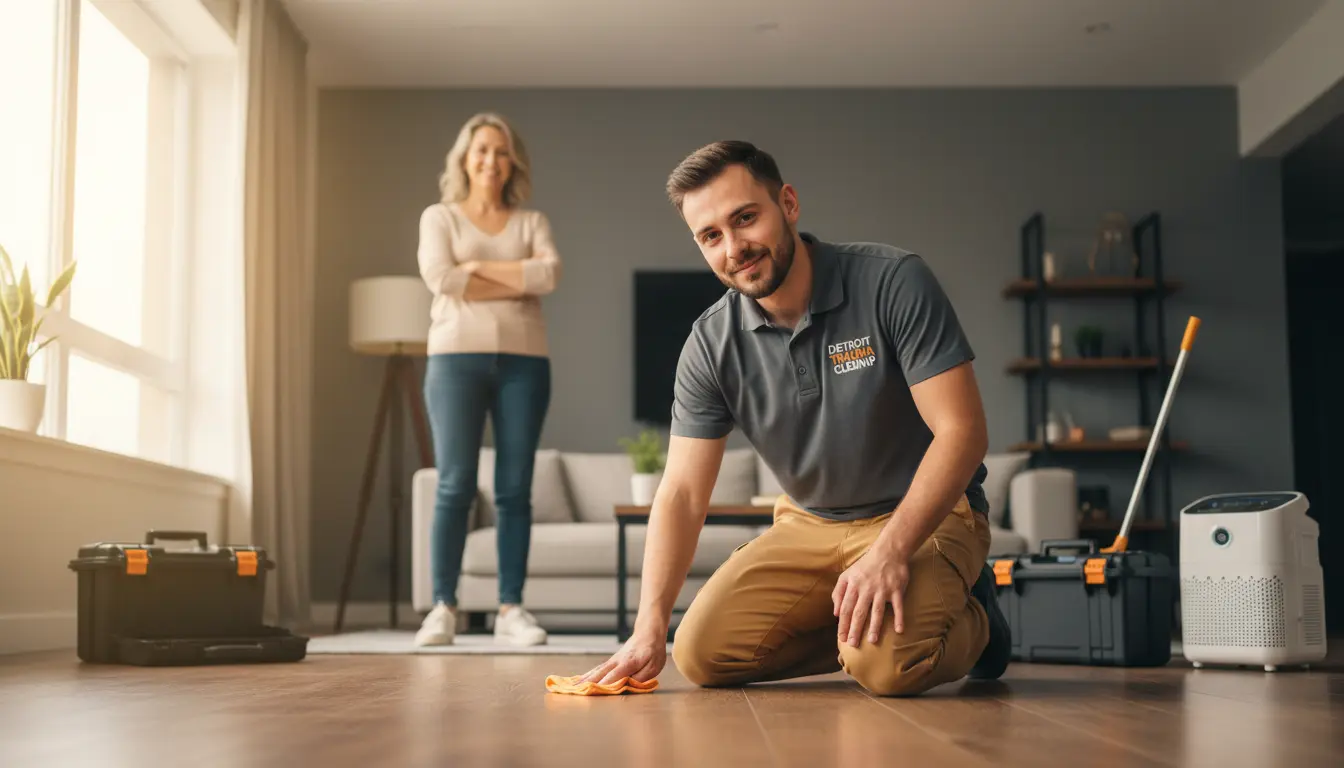
Professional cleanup specialists are trained to handle exactly this type of situation. They do not simply clean; they perform forensic restoration, ensuring every trace of bloodborne pathogens, tissue, and microbial contaminants is removed and the site is returned to a safe, habitable state. In Detroit, where older homes and fluctuating seasonal temperatures create unique challenges, the difference between a thorough remediation and a superficial cleanup can be the difference between a safe environment and a long-term health hazard. Detroit Trauma cleanup has established itself as the premier provider of these services, combining IICRC-certified protocols with deep local knowledge of Wayne County regulations and the architectural quirks of the region’s historic housing stock.
The Step-by-Step Remediation Workflow
Every biohazard remediation project follows a rigorous, science-based protocol designed to eliminate risk at every stage. The process begins with a comprehensive risk assessment. The specialist evaluates the scene to identify all potential hazards—biological, chemical, and structural. In Detroit, where winter ice can hide trip hazards and aging infrastructure may contain lead paint or asbestos, this initial walkthrough is critical. The team then establishes containment zones using heavy-gauge plastic sheeting and negative air machines to prevent cross-contamination to unaffected areas of the property.
Once containment is set, the personal protective equipment (PPE) protocol is initiated. Technicians don full Tyvek suits, N100 respirators, face shields, and double-gloved hands with cut-resistant liners. This is not optional; it is mandated by OSHA’s Bloodborne Pathogens Standard (29 CFR 1910.1030). The PPE protects the workers from exposure to hepatitis B, HIV, and other pathogens present in blood and other potentially infectious materials. After PPE is verified, the physical removal of biohazardous materials begins. All contaminated porous items—carpet, padding, drywall, insulation, and often subflooring—are carefully cut out and double-bagged in regulated medical waste containers. Non-porous surfaces are scraped and wiped down.
The next phase involves chemical sanitation using EPA-registered hospital-grade disinfectants. These are not household bleach solutions; they are specifically formulated to inactivate viruses and bacteria within a defined contact time—typically 10 to 15 minutes. After the disinfectant is applied and allowed to dwell, the surface is cleaned with a detergent solution and rinsed. Then comes the verification step: adenosine triphosphate (ATP) fluorescence testing. A swab is taken from the cleaned surface and inserted into a handheld luminometer. The device measures the amount of ATP—a molecule present in all living cells—and provides a numerical reading. A reading below a specific threshold (often 10 relative light units) indicates the surface is biologically clean. This objective measurement replaces guesswork.
Finally, structural encapsulation is performed where necessary. In Detroit’s older homes, this may involve sealing exposed subfloors with a specialized primer before new flooring is installed, or applying an antimicrobial coating to bare wood studs. The entire process can take anywhere from several hours to multiple days, depending on the extent of contamination and the complexity of the structure. Seasonal factors also play a role: during the humid summer months, microbial growth can accelerate, requiring additional treatment with fungicides. In winter, heating systems can drive odors into ductwork, necessitating HVAC decontamination.
Tools of the Trade
Specialists rely on industrial-grade negative air machines equipped with HEPA filters to capture airborne particles as small as 0.3 microns. Hospital-grade disinfectants like accelerated hydrogen peroxide or sodium dichloroisocyanurate are standard. Enzyme treatments are sometimes used to break down organic matter before removal, reducing the volume of waste. Forensic cleaning tools—such as specialized scrapers, ozone generators for odor neutralization, and thermal imaging cameras to detect hidden moisture—are part of the standard kit. Every piece of equipment is selected based on scientific evidence of its effectiveness against bloodborne pathogens and its suitability for the specific materials encountered in Detroit’s residential architecture.
Professional Remediation vs. Standard Cleaning: A Data Comparison
To understand why biohazard cleanup cannot be left to general janitorial services, consider the following comparison based on the IICRC S540 Standard for Trauma and Crime Scene Cleanup.
| Feature/Metric | Professional Biohazard Remediation | Standard Residential Cleaning |
|---|---|---|
| Regulatory Compliance | OSHA, EPA, IICRC, and local Wayne County health codes strictly followed | No specialized regulatory oversight |
| Pathogen Elimination | Verified via ATP testing; 99.99% reduction in microbial load | No verification; bleach may not inactivate all pathogens |
| Structural Assessment | Full inspection for hidden saturation; removal of all porous materials | Surface cleaning only; hidden contamination remains |
| Waste Disposal | Regulated medical waste incineration per Michigan DEQ guidelines | Typically disposed of in regular trash (illegal) |
| Odor Removal | Ozone or hydroxyl treatment; HVAC cleaning | Air fresheners only (temporary) |
| Insurance Documentation | Detailed chain-of-custody and cleaning logs provided | None |
Expert Insights: What Only a Specialist Knows
Three advanced diagnostic techniques separate a true remediation expert from a general cleaner. First, detecting hidden biological seepage. Blood and other fluids can travel along floor joists, behind baseboards, and into wall cavities, especially in Detroit’s balloon-frame homes where there are no fire stops. A specialist uses a thermal imaging camera and a moisture meter to trace the path of liquids, even after the visible stain has dried. Second, understanding when porous materials must be replaced rather than cleaned. Gypsum drywall is like a sponge; once saturated with biological fluids, it cannot be effectively sanitized because the interior remains contaminated. The IICRC S540 standard mandates removal of all porous materials within a defined perimeter around the contamination source. Third, the importance of negative pressure. Without proper air pressure differentials, airborne pathogens can escape the containment zone and contaminate clean areas. Specialists use manometers to verify that the containment area is under negative pressure relative to surrounding rooms.
Common mistakes property owners make include using household bleach on biological matter. Bleach is corrosive and can actually fix proteins to surfaces, making pathogens harder to remove. Furthermore, bleach does not kill all pathogens—some bacterial spores survive. Waiting for odor to dissipate naturally is another error. Odors are caused by volatile organic compounds (VOCs) produced by microbial decomposition; they indicate ongoing biological activity. Allowing untrained personnel—including family members or well-meaning neighbors—into the site exposes them to serious health risks such as hepatitis, tuberculosis, or fungal infections. In Detroit, where many properties are unoccupied for extended periods, well-intentioned relatives sometimes attempt cleanup themselves, only to face long-term respiratory issues or structural damage that costs thousands to remediate later.
Pricing for Biohazard Remediation Services
Costs vary based on several factors, but realistic pricing structures include:
- Standard site mobilization fee: $250–$500 to cover travel, setup of containment, and initial assessment, especially during Detroit winter conditions when ice and snow require extra time.
- Hourly remediation rate: $150–$300 per hour per technician, depending on the complexity and the level of PPE required (e.g., full hazmat vs. standard).
- Specialized disposal fees: $150–$400 per 55-gallon drum of biohazardous waste, which must be transported to licensed incineration facilities.
Three primary factors influence the total cost. First, the extent of structural material replacement. If the contamination has soaked into subflooring, drywall, or insulation, the cost of removal, disposal, and replacement can add several thousand dollars. Second, the total volume of biohazardous waste. Larger scenes or those involving decomposed remains generate more waste, increasing disposal fees. Third, the necessity for specialized HVAC decontamination. If odor or pathogens have entered the ductwork, the entire system must be cleaned and sealed, which can add 20–30% to the total project cost. Insurance often covers these expenses under property or liability policies for trauma scenes, but it is essential to verify coverage before work begins.
Safety & Standards: The Backbone of Professional Remediation
Certifications are not just wall decorations; they represent a commitment to safety and quality. The Institute of Inspection, Cleaning and Restoration Certification (IICRC) offers the S540 standard specifically for trauma and crime scene cleanup. Technicians must complete annual training and pass exams to remain certified. OSHA’s Bloodborne Pathogens Standard (29 CFR 1910.1030) mandates that all employees with occupational exposure receive training, hepatitis B vaccination, and proper PPE. In practice, this means every Detroit Trauma cleanup technician carries a current OSHA certificate and can produce a written exposure control plan. Additionally, all biohazard waste is handled in compliance with the Michigan Department of Environment, Great Lakes, and Energy (EGLE) regulations, which require tracking manifests for incineration. These standards protect not only the workers but also property owners, future occupants, and the broader community from communicable diseases such as HIV, hepatitis C, and MRSA. Following a recent outbreak of drug-resistant bacteria in Detroit, the importance of thorough disinfection has never been clearer.
Frequently Asked Questions About Biohazard Remediation
Can I clean up a small blood spill myself?
While a small, fresh blood spill on a non-porous surface can be cleaned with a 1:10 bleach solution, it is risky. Bloodborne pathogens like hepatitis B can survive outside the body for up to a week. Without proper PPE and verification, you cannot be certain the area is sterile. Moreover, once blood dries or soaks into porous surfaces, professional removal is the only safe option. The IICRC S540 standard recommends professional remediation for any incident involving more than a few drops, especially if the blood is from an unknown source.
How long does the entire remediation process take?
Duration depends on the size and severity of the scene. A single-room incident may take 4–8 hours for removal and disinfection. A multi-room scene involving decomposition can take 2–5 days. Factors include the need for structural drying, the number of layers of material to remove, and the complexity of the HVAC system. In Detroit’s older homes with plaster walls, demolition may take longer due to the need to avoid damaging adjacent historic features.
Will my insurance cover biohazard cleanup?
Many homeowners’ and property insurance policies cover biohazard remediation under the “sudden and accidental” clause, particularly for events like unattended deaths, crime scenes, or sewage backups. However, coverage varies, and pre-authorization is recommended. Detroit Trauma cleanup works directly with insurance adjusters to document all steps and provide the necessary paperwork for claims. It is always best to check your policy and contact your agent before proceeding.
What happens to the removed biohazard waste?
All waste is double-bagged in red biohazard bags, labeled, and placed in rigid containers. A licensed medical waste hauler transports it to an incineration facility approved by the Michigan Department of Environmental Quality. The entire process is tracked via a chain-of-custody manifest, which is provided to the property owner for their records. This ensures compliance with federal and state regulations and prevents illegal dumping.
Professional Biohazard Remediation in Detroit
When tragedy strikes, the aftermath should not add to the burden. Professional biohazard remediation restores safety, dignity, and peace of mind. Detroit Trauma cleanup combines IICRC-certified expertise with a deep understanding of Detroit’s unique environment—from the challenges of historic architecture to the demands of winter weather. Every project is handled with discretion, technical rigor, and compassion for those affected. Whether you are a property owner facing an unattended death, a crime scene, or a hoarding situation with biological hazards, the right response is immediate, professional, and thorough. Do not risk health or property value by attempting to handle it alone. Contact Detroit Trauma cleanup for a confidential assessment and let trained specialists restore your space to a safe, clean condition.