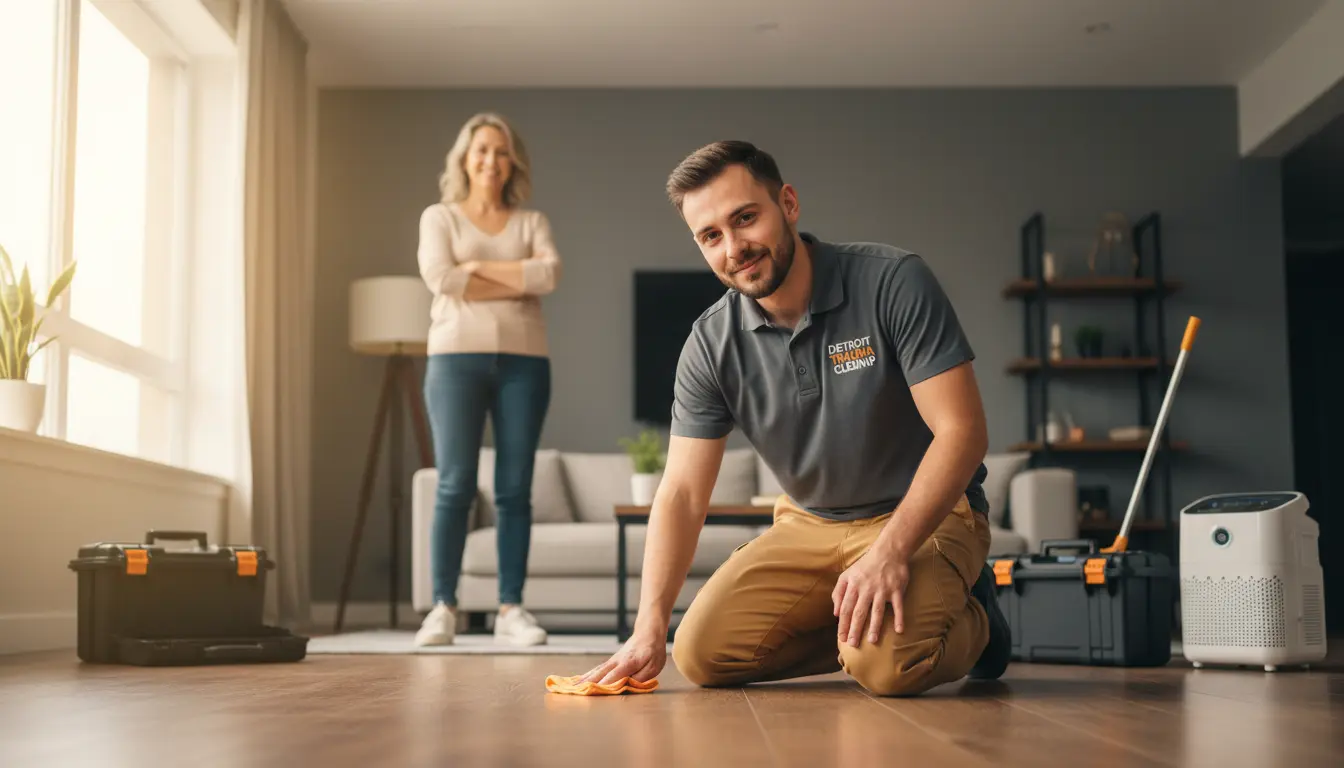
Most people assume that a traumatic event in a home requires nothing more than a thorough cleaning with bleach. That assumption is dangerously wrong. In Detroit, where the architectural fabric of Corktown and surrounding neighborhoods includes century-old wood framing, porous brick, and plaster walls, biological material can seep deep into substrates that household cleaners cannot reach. The result is not just a lingering odor — it is a persistent health hazard involving bloodborne pathogens, bacterial growth, and structural degradation that accelerates over time.
Professional trauma cleanup services near Corktown and surrounding areas are not about aesthetics; they are about restoring a property to a safe, habitable condition following an incident that leaves behind biohazardous materials. The science behind this work draws on regulations from OSHA, EPA, and IICRC S540 standards, and the execution requires specialized training, equipment, and disposal protocols. For property owners in Detroit, understanding the difference between a standard janitorial service and a certified biohazard remediation company can mean the difference between a restored home and a future liability.
The Technical Process of Professional Remediation
When a trauma cleanup team arrives at a site in Corktown, the first step is a comprehensive risk assessment. Technicians evaluate the type and volume of biological material, the porosity of surfaces, the presence of bloodborne pathogens, and the potential for airborne contamination. This assessment drives the entire remediation plan, including the level of personal protective equipment (PPE) required — typically Tyvek suits, N95 respirators or full-face masks, and chemical-resistant gloves.
Next, the team establishes containment zones using negative air machines equipped with HEPA filtration. These machines create a pressure differential that prevents airborne particles from migrating to unaffected areas of the property. This is especially critical in Detroit’s older homes, where shared air spaces and ductwork can quickly spread contaminants throughout the structure. Once containment is in place, the physical removal of biohazardous waste begins. Technicians use hospital-grade disinfectants and specialized enzyme treatments that break down organic matter at the molecular level, ensuring that pathogens are neutralized rather than just spread around.
Validation and Final Testing
After the cleaning phase, the team performs adenosine triphosphate (ATP) testing — a fluorescence-based method that detects residual biological material on surfaces. ATP readings below industry thresholds confirm that the area is free of organic contamination. If levels are elevated, the team re-treats the area until the surface passes inspection. Finally, structural encapsulation may be applied to seal porous materials like unsealed concrete or exposed wood, preventing future microbial growth. This step is particularly relevant in Detroit’s climate, where winter heating and summer humidity create conditions that accelerate decomposition and odor migration if any residue remains.
Professional Remediation vs. Standard Janitorial Cleaning
| Feature/Metric | Professional Biohazard Remediation | Standard Residential Cleaning |
|---|---|---|
| Regulatory Compliance | OSHA 29 CFR 1910.1030, EPA waste disposal, IICRC S540 | None |
| Pathogen Elimination | EPA-registered hospital-grade disinfectants, enzyme treatments, ATP testing | Household bleach, which is ineffective against many bloodborne pathogens |
| Structural Assessment | Full evaluation of porous materials, HVAC decontamination, odor migration analysis | Surface-level inspection only |
| Waste Disposal | Licensed biohazardous waste transport and incineration | Regular trash, risking legal and health violations |
| Cross-Contamination Prevention | Negative air pressure, HEPA filtration, sealed containment | No containment procedures |
Expert Insights: What Professionals Look For
Experienced trauma cleanup technicians in Detroit share three diagnostic tips that set them apart. First, detecting hidden biological seepage often requires the use of moisture meters and thermal imaging cameras. Blood and other fluids wick into wall cavities and under floorboards, especially in historic Corktown homes with lath and plaster construction. Without these tools, the contamination remains unseen and untreated. Second, porous materials such as carpet, upholstery, and drywall almost always require replacement rather than cleaning. The reason is that once biological matter penetrates the pores, even the most aggressive cleaning cannot remove all pathogens — and the risk of bacterial regrowth is high. Third, maintaining negative pressure during the entire remediation process is non-negotiable. Without it, airborne contaminants from the affected area can travel through the home’s HVAC system, contaminating every room.
Common mistakes property owners make include using household bleach on biological matter. Bleach can actually fix proteins to surfaces, making them harder to remove and potentially creating a toxic gas when mixed with other cleaners. Another mistake is waiting for the odor to dissipate naturally. Odors are caused by volatile organic compounds (VOCs) and bacteria; they will not disappear without thorough remediation. Finally, allowing untrained personnel — such as well-meaning family members or a general cleaning crew — into the site exposes them to bloodborne pathogens and can lead to long-term health issues like hepatitis B, HIV, and respiratory infections. The structural damage from improper cleaning can also reduce the property’s value significantly.
Pricing Structures for Trauma Cleanup
- Standard site mobilization fee: This covers the cost of dispatching a certified team, transporting equipment, and setting up containment. In Detroit, mobilization fees typically range from $250 to $600 depending on distance and urgency.
- Hourly remediation rates: Most companies charge between $150 and $350 per hour per technician. Complex jobs involving large volumes of biohazardous waste or extensive structural damage may require multiple technicians over several days.
- Specialized disposal costs: Biohazardous waste must be transported in approved containers and incinerated at licensed facilities. This fee is often calculated per pound or per container, averaging $50 to $200 per container.
- Factors that influence cost: The extent of structural material replacement (e.g., removing and replacing drywall, flooring, or insulation), the total volume of biohazardous waste, and the necessity for HVAC decontamination or duct cleaning all add to the final price. In Detroit’s winter months, ice and snow can delay site access, increasing labor hours.
Safety and Standards: Why They Matter
Certifications like IICRC S540, OSHA Bloodborne Pathogens Standard 29 CFR 1910.1030, and local waste management authorizations are not just bureaucratic hurdles — they are the foundation of safe and effective remediation. The OSHA standard requires that all employees who may be exposed to blood or other potentially infectious materials receive comprehensive training, use appropriate PPE, and follow specific work practices. In a real-world scenario, this means that a certified technician knows how to handle a spill of blood without exposing themselves or others, and how to properly dispose of contaminated sharps.
Authorized waste management services in Wayne County haul away biohazardous waste in clearly marked containers and track every step of the disposal chain. This protects property owners from legal liability if the waste is later found in an improper location. Moreover, following IICRC S540 standards ensures that the remediation is thorough enough to prevent future microbial growth, safeguarding the health of future occupants. In Detroit, where many properties are turned over quickly or rented out, a proper certification can mean the difference between a safe living environment and a hidden health crisis.
Frequently Asked Questions About Trauma and Biohazard Remediation
What types of incidents require professional trauma cleanup?
Any incident that leaves behind blood, bodily fluids, or other potentially infectious materials requires professional remediation. This includes unattended deaths, suicides, homicides, industrial accidents, and animal infestations that create biohazardous debris. The primary concern is the presence of bloodborne pathogens such as hepatitis B, hepatitis C, and HIV, which can survive on surfaces for days or even weeks. Professional teams use chemical disinfectants and testing protocols that are proven to inactivate these pathogens, something that household cleaners cannot guarantee.
How long does the cleanup process take?
The duration depends on the size of the affected area, the extent of the contamination, and the complexity of the structure. A small room with limited blood or fluid exposure might be completed in a few hours. A large, multi-room scene or a decomposed body that has been present for weeks can take one to three days. In Detroit’s old homes, where walls are often made of plaster and lath, accessing hidden pockets of biological material can add significant time. The team will provide an estimated timeline after the initial assessment.
Is it safe to stay in the property during the cleanup?
No. During the remediation process, the area is under negative pressure, and chemicals are used that can be harmful if inhaled. The team will advise the property owner to vacate the premises until the work is complete and the air quality has been verified. In some cases, adjacent rooms may be safe, but the containment zone is strictly off-limits to anyone without proper PPE. This is a safety requirement under OSHA guidelines and the IICRC S540 standard.
Will my insurance cover the cost of trauma cleanup?
Many homeowners and renters insurance policies cover biohazard remediation as part of their property damage or personal liability provisions. However, coverage varies widely. It is important to contact your insurance provider as soon as possible after the incident. The trauma cleanup company can provide a detailed invoice that includes the scope of work, which helps with the claims process. In Detroit, some companies also work directly with insurance adjusters to expedite approval.
What happens if I try to clean the site myself?
Attempting a DIY cleanup exposes you to bloodborne pathogens and may violate local health and safety regulations. It also increases the risk of spreading contamination to other areas of the home. Without proper training, equipment, and disposal methods, you may create a long-term health hazard that reduces the property’s value and makes it uninsurable. Professional remediation is the only legally and medically safe approach.
Professional Biohazard Remediation in Detroit
Choosing a trauma cleanup service near Corktown and surrounding areas requires more than just a quick search for a cleaning company. It demands a provider that understands the local building stock, the seasonal challenges of Michigan’s climate, and the stringent regulatory environment of Wayne County. Detroit Trauma cleanup brings certified technicians, advanced equipment, and a compassionate approach to every job. From the initial risk assessment to the final ATP test, we ensure that the property is restored to a safe, livable condition — and that the homeowner or property manager does not have to face the aftermath alone.